7 AC Power Supply Buying Tips for Global Buyers?

Time:2026-09-17 Author:Amelia
0%

Buying an AC Power Supply for international use is rarely a simple voltage-matching exercise. A unit marked “universal input” may still require the correct plug, frequency, output connector, or regional certification. Experienced buyers examine the complete specification sheet, not only the product title. Small details matter. A 24-volt supply with insufficient current can overheat under continuous industrial load. A loose connector can interrupt equipment during vibration or transport.

This guide presents seven practical buying tips for global buyers. It covers input voltage ranges, output stability, power capacity, efficiency, protection features, compatibility, and supplier reliability. Buyers should compare real test data, warranty terms, factory quality controls, and traceable certifications before placing an order. Product samples deserve testing under normal and peak conditions. Check heat, noise, startup behavior, and performance after several hours. Ask whether replacement units and technical support are available in your market.

No checklist catches every failure.

Regional requirements can change, and supplier documents may contain unclear claims. That is why independent verification remains valuable. A qualified engineer or recognized testing laboratory can review risks before purchase. In my experience, the cheapest offer often becomes expensive after installation delays, unstable output, or difficult returns. Still, premium pricing does not guarantee quality. Buyers should challenge assumptions, record acceptance criteria, and compare suppliers using the same evidence. Careful purchasing protects equipment, reduces downtime, and supports dependable operation across different markets.
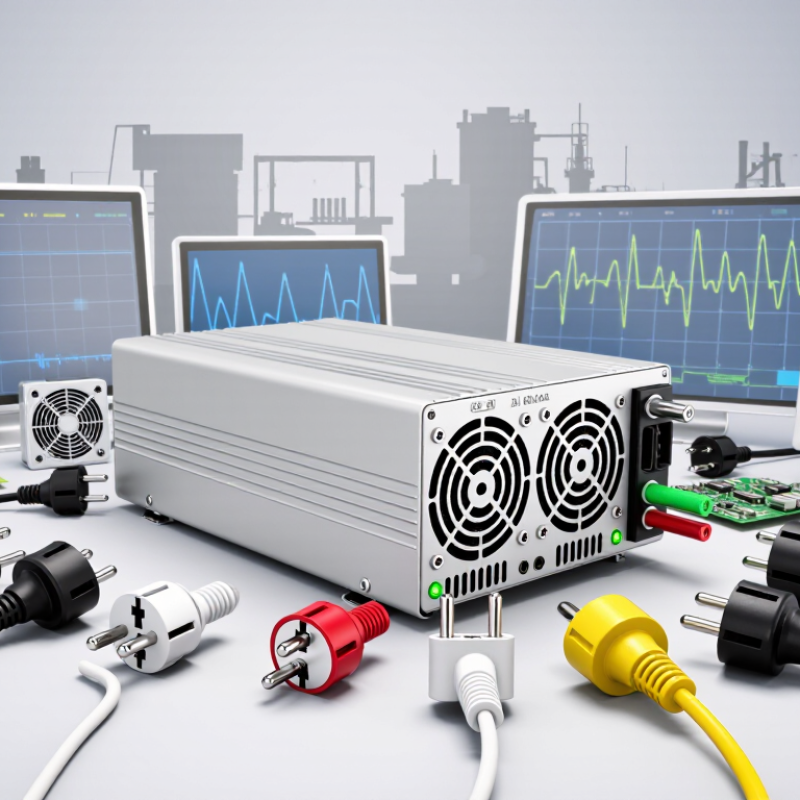
7 AC Power Supply Buying Tips for Global Buyers?

Define Your Voltage, Frequency, and Plug Requirements

Before ordering an AC power supply, define the destination’s electrical conditions in writing. Record the required voltage, frequency, phase, and plug style. A supply marked 230 V may not suit a site delivering 220 V consistently. Small differences matter.

Seven checks help prevent expensive surprises.

  1. Confirm the input range, such as 100–240 V, instead of trusting a single voltage label.
  2. Verify whether the unit accepts 50 Hz, 60 Hz, or both.
  3. Match the plug’s pins, grounding method, and physical fit with the local socket.
  4. Check the output voltage and current against the equipment nameplate.
  5. Leave a sensible power margin for startup demand.
  6. Review cable length and insulation for the installation environment.
  7. Ask for test reports, wiring diagrams, and clear operating instructions.

Measure the site when possible. Do not rely only on an old spreadsheet. I once reviewed a project where the stated frequency was correct, but the socket lacked protective grounding. That detail changed the purchasing decision. Inspectors and electricians should confirm local requirements before shipment. Requirements can differ between a laboratory, workshop, and outdoor cabinet. A converter may solve voltage differences, but it cannot automatically correct poor wiring or unstable supply.

Be precise, but stay realistic. Product documents sometimes omit plug dimensions or surge behavior. Request those details before paying. Keep photos of the socket and the equipment label. They often reveal assumptions that written specifications miss.

Choose the Right AC Power Supply Type and Capacity

Choose the Right AC Power Supply Type and Capacity
Global buyers often start with wattage, but the supply type matters just as much. Choose a regulated switching supply for efficient industrial equipment and compact systems. Select a linear supply when ultra-low noise matters more than size or heat. Check input compatibility carefully: worldwide equipment may require 100–240 V and 50/60 Hz operation. Single-phase units suit smaller loads, while three-phase supplies support high-power machinery with better current distribution.
Capacity needs more than a simple load total. Add motor inrush, capacitor charging, and future expansion. A practical target is continuous operation below 80% of rated output. Keep margin for hot factories, blocked airflow, and high-altitude installation. A 1,000-watt load may need a 1,500-watt supply. Sometimes, that still proves optimistic.
The IEA’s Electricity 2024 report estimates data centres used about 460 TWh globally in 2022, with demand potentially exceeding 1,000 TWh by 2026. Efficiency is no longer a minor purchasing detail. Uptime Institute’s 2024 Global Data Center Survey reported an average power usage effectiveness of 1.56, showing that conversion losses remain significant. Ask for efficiency curves, standby consumption, power-factor data, and thermal derating charts. Confirm compliance with IEC 62368-1 and applicable electromagnetic-compatibility requirements. A quiet unit can still create harmonics. Test the actual load profile before approving the purchase.

Check Safety Standards and Global Compliance

For global buyers, safety compliance should be checked before price, wattage, or delivery speed. An AC power supply must match the destination’s voltage, frequency, plug configuration, and earthing requirements. Confirm whether the product follows the relevant safety standard, such as IEC 62368-1 or IEC 61010-1. The correct standard depends on the equipment and its operating environment. A certificate alone is not enough.

Tip: Request the declaration of conformity, test reports, and certification scope. Check the model number carefully. Documents should match the exact power supply, not a similar series. Also review EMC performance, insulation ratings, overload protection, and temperature limits. These details matter in crowded industrial rooms and poorly ventilated cabinets. Small errors can create expensive delays.

During supplier evaluations, I have seen buyers trust familiar labels without checking regional requirements. That approach feels efficient, but it can fail at customs or during installation. Verify destination-specific marks, importer responsibilities, and applicable energy-efficiency rules. Ask an accredited testing body or qualified compliance engineer when requirements remain unclear. Online summaries can be outdated. Even experienced teams miss changes. Keep a written compliance checklist, record document versions, and test a sample under real load before placing a large order. Safety is not just paperwork; it is performance you can verify.

Compare Efficiency, Reliability, and Operating Features

Global buyers should compare AC power supplies beyond purchase price. Check input-voltage range first, especially when equipment may move between regions. A unit marked for worldwide input can still lose efficiency under unstable grid conditions. Review efficiency at 25%, 50%, and 100% load, not only the headline figure. Light-load performance matters for devices that sleep often.

Output stability deserves practical testing. Ask for voltage regulation, ripple measurements, and recovery time after sudden load changes. Reliability depends on more than advertised service life. Examine thermal design, cooling method, component quality, and derating data at high temperatures. Protection against overvoltage, overcurrent, short circuits, and overheating should be clearly documented. I have seen impressive specifications become less useful when airflow was restricted.

Operating features can determine daily convenience. Remote monitoring, adjustable output, status indicators, and alarm contacts may reduce maintenance time. Confirm connector types, mounting dimensions, noise levels, and control interfaces before ordering. Check whether the supply starts reliably after repeated power interruptions. Certification documents and test reports should match the exact model and intended market. Local technical support and replacement procedures also affect long-term reliability. Do not assume every digital display is accurate; verify readings with calibrated instruments during evaluation. Some buyers overlook this step, and the mistake can remain hidden until production changes.

Evaluate Suppliers, Costs, Warranty, and After-Sales Support

7 AC Power Supply Buying Tips for Global Buyers?

Global buyers should compare AC power supplies beyond unit price. Request test reports, efficiency curves, input tolerances, and production lead-time evidence. The IEA Electricity 2024 report estimates that data centers used 460 TWh globally in 2022. Efficiency is a procurement cost, not a marketing detail. Ask for efficiency at 25%, 50%, and 100% load. I once accepted a low bid. It excluded freight, customs, and retesting. That shortcut hurt more than expected.

Evaluate suppliers through recent customer references, audited quality records, and component traceability. Do not trust a polished PDF alone. Check calibration records, change-control notices, and failure-reporting procedures. Uptime Institute’s 2024 Global Data Center Survey reported that 54% of respondents said their latest outage cost more than $100,000. Require factory acceptance testing under voltage sag, overload, heat, and restart conditions. A sample that passes normal conditions may still fail in a hot cabinet.

Warranty language needs numbers. Specify coverage period, excluded parts, response time, return freight, and replacement procedures. After-sales support should include remote diagnosis, local repair options, firmware control, and spare-unit planning. Ask how many engineers cover your region. Ask for escalation contacts, not generic inboxes. The World Bank’s 2023 Logistics Performance Index treats timeliness as a core measure, so delivery reliability belongs in the contract. Some agreements look excellent until a board fails offshore. That possibility deserves a written service level.

7 AC Power Supply Buying Tips for Global Buyers: Evaluate Suppliers, Costs, Warranty, and After-Sales Support

Tip Evaluation Dimension What to Check Practical Benchmark or Requirement Buyer Action Risk if Ignored
1 Evaluate supplier capability Production capacity, quality systems, engineering resources, export experience, inspection procedures, and documented change-control processes. Request a current quality certificate, product test reports, sample inspection records, production lead-time data, and at least two comparable project references. Verify that certificates apply to the exact model and rating being purchased. Use a weighted supplier scorecard covering technical capability, quality, delivery, financial stability, and communication. Conduct a pre-shipment inspection for the first order. Inconsistent quality, missed delivery dates, unapproved component substitutions, and limited support when problems occur.
2 Confirm electrical compatibility Nominal input voltage and frequency, output voltage and current, phase configuration, plug type, inrush current, regulation, ripple, protection functions, and operating temperature. Specify the destination grid precisely. Common systems include 100–120 V or 220–240 V AC and 50 or 60 Hz. Require documented output accuracy, overload, short-circuit, over-temperature, and surge protection values. Provide a written electrical specification and request a signed compliance matrix before approving samples or production. Overheating, nuisance shutdowns, unstable output, equipment damage, or inability to use the supply in the target market.
3 Check safety and market compliance Applicable product-safety, EMC, environmental, and import requirements for each destination country or region. Select the relevant standard according to the application, such as IEC 62368-1 for audio/video and information technology equipment or IEC 61010-1 for measurement, control, and laboratory equipment. EMC testing commonly references IEC 61000-series requirements. Ask for test reports from an accredited laboratory, declaration documents, markings, user manuals, and traceable model numbers. Confirm whether local registration or importer documentation is required. Customs delays, failed conformity checks, electromagnetic interference, product recalls, or legal restrictions on sale.
4 Compare total cost of ownership Unit price, tooling, engineering fees, packaging, freight, duties, taxes, installation, energy consumption, spare parts, and expected service costs. Compare landed cost rather than ex-works price. For power supplies used continuously, calculate energy cost from rated input power, operating hours, local electricity price, and efficiency under the actual load profile. Request quotations on the same quantity, Incoterm, currency, warranty basis, packaging specification, and delivery schedule. Separate one-time and recurring costs. A low purchase price can become more expensive because of freight surprises, low efficiency, frequent failures, or costly replacement parts.
5 Review efficiency and operating performance Average efficiency, no-load power consumption, power factor, thermal performance, acoustic noise, derating, and expected service life. Compare efficiency at the loads where the unit will actually operate, not only at full load. Verify the permitted ambient-temperature range and derating curve; many power supplies require output derating at elevated temperatures. Request efficiency curves, thermal test data, MTBF methodology, cooling requirements, and burn-in or reliability-test procedures. Validate performance with production samples. Higher electricity bills, excessive heat, reduced component life, unexpected shutdowns, and unsuitable performance in hot or enclosed installations.
6 Negotiate a clear warranty Warranty duration, coverage scope, exclusions, return procedure, replacement policy, shipping responsibility, and treatment of defects in batches. A commercial warranty commonly ranges from 12 to 36 months, depending on product type and contract terms. The agreement should define the start date, acceptable failure rate, response time, and remedy for repeated failures. Put warranty terms in the purchase contract. Require serial-number traceability, failure analysis for returned units, and written approval for any warranty exclusions. Disputes over shipping costs, refusal of legitimate claims, long replacement cycles, and unplanned inventory expenses.
7 Assess after-sales support and spare parts Technical response time, multilingual documentation, remote troubleshooting, repair capability, replacement-stock policy, firmware or design-change notices, and end-of-life support. Define a service-level agreement with named contacts, first-response targets, escalation procedures, and spare-parts availability. Keep critical replacement units or parts when downtime would affect production. Test the supplier's support process before the purchase by submitting technical questions. Request troubleshooting guides, wiring diagrams, parts lists, and a documented RMA process. Long equipment downtime, difficult diagnosis, inconsistent repairs, obsolete parts, and higher maintenance costs across international locations.
Note: Benchmarks are general purchasing guidelines. Final requirements should be confirmed against the application, destination-market regulations, installation environment, and contractual specifications.

FAQS

Which AC power supply type suits compact industrial equipment?

A regulated switching supply suits efficient, compact systems. It usually produces less heat and uses less space. Check its efficiency curve.

When is a linear power supply the better choice?

Choose a linear supply when extremely low noise matters most. It can be larger and warmer. That trade-off may still be worthwhile.

What input requirements should global buyers verify?

Confirm voltage, frequency, plug configuration, and earthing requirements. Worldwide equipment may need 100–240 V and 50/60 Hz operation. Do not guess.

Should I choose single-phase or three-phase power?

Single-phase units fit smaller loads. Three-phase supplies suit high-power machinery and distribute current more evenly. The installation must support the selected phase system.

How much capacity should an AC power supply have?

Include normal load, motor inrush, capacitor charging, and future expansion. Keep continuous operation below 80% of rated output. Leave room.

Is a 1,000-watt supply enough for a 1,000-watt load?

Not always. A 1,000-watt load may need a 1,500-watt supply. Hot factories, blocked airflow, and high altitude reduce available capacity. Sometimes, that estimate still proves optimistic.

Which compliance documents should I request?

Request the declaration of conformity, test reports, and certification scope. Check the exact model number on every document. Similar series names are not enough.

How can I check whether a supply is safe for its destination?

Confirm the applicable safety standard for the equipment and environment. Review insulation, overload protection, temperature limits, and EMC performance. Test a sample under real load.

Why should I examine efficiency and thermal data?

Conversion losses increase operating costs and heat. Ask for standby consumption, power-factor data, efficiency curves, and thermal derating charts. A quiet unit can still create harmonics. Test it.

Conclusion

Buying an AC Power Supply for international use requires careful planning beyond comparing prices. Start by confirming the required voltage, frequency, plug type, and regional compatibility of your equipment. Then select the appropriate power supply type and capacity, allowing sufficient headroom for startup loads and future needs. Buyers should also verify applicable safety certifications, protection features, and compliance requirements for the destination market.

A reliable purchasing decision should consider energy efficiency, voltage stability, cooling design, operating noise, durability, and ease of maintenance. Compare suppliers based on product consistency, production capability, communication, lead times, and total ownership cost rather than purchase price alone. Finally, review warranty coverage, replacement policies, technical documentation, and after-sales support. A supplier that provides clear specifications and dependable service can reduce installation risks, downtime, and long-term operating expenses. By evaluating these factors systematically, global buyers can choose an AC Power Supply that is safe, efficient, compatible, and suitable for their specific application.

Amelia

Amelia

Amelia is a seasoned marketing professional with a wealth of expertise in our company’s core offerings. With an unwavering passion for driving growth and innovation, she plays a pivotal role in shaping our marketing strategies and enhancing brand visibility. A key aspect of her responsibilities......