Top 10 Power Management System Suppliers Worldwide

Time:2026-10-07 Author:Ethan
0%

As electricity demand rises, the Power Management System has become a strategic control layer, not merely a monitoring tool. The International Energy Agency’s Electricity 2024 report expects global electricity demand to grow strongly through 2026, driven by industry, cooling, electrification, and data centers. Every additional megawatt increases the need for accurate measurement, stable distribution, and faster fault response. A failed breaker, overheated switchboard, or poorly balanced load can interrupt an entire production line.

This article introduces the Top 10 Power Management System Suppliers Worldwide. The comparison considers system integration, real-time visibility, operational reliability, cybersecurity, software capability, and global service coverage. These criteria reflect practical priorities reported across industrial energy studies and data-center research. The Uptime Institute’s Global Data Center Survey continues to identify power infrastructure as a central concern in outage prevention and resilience planning. The U.S. Department of Energy also emphasizes metering, controls, and continuous performance improvement in facility energy management.

The suppliers discussed here serve different environments. Some focus on utility-scale infrastructure. Others specialize in factories, commercial buildings, hospitals, or hyperscale data centers. Their strengths are not identical. That matters.

No ranking is perfect. Vendor performance depends on installation quality, local regulations, maintenance skills, and the age of existing equipment. A sophisticated dashboard cannot repair neglected cables or unclear operating procedures. Readers should therefore treat this list as a research starting point, supported by published industry evidence and practical evaluation rather than marketing claims alone.
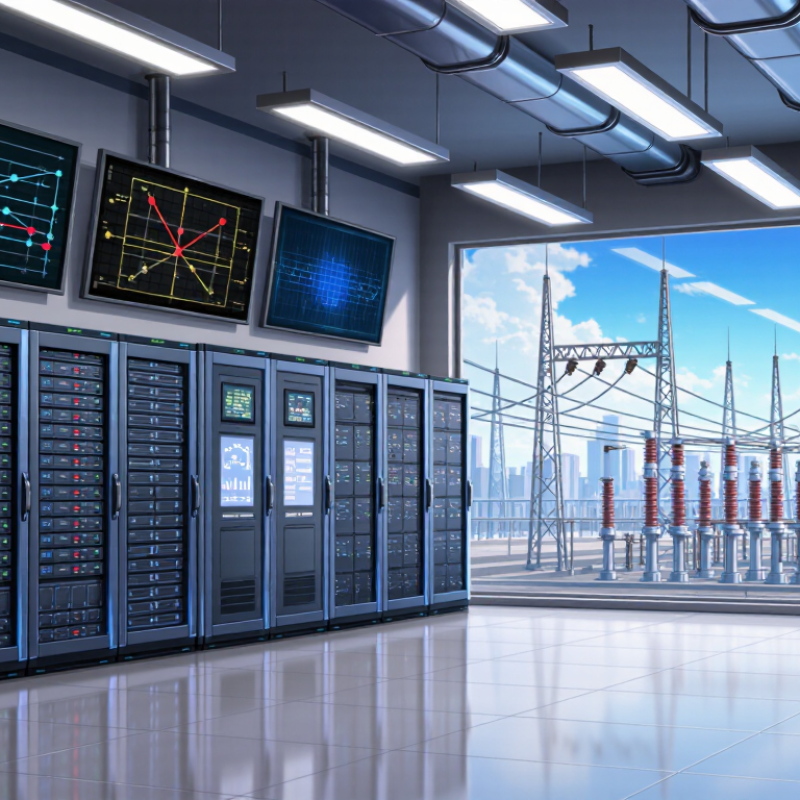
Top 10 Power Management System Suppliers Worldwide

Definition and Scope of Power Management Systems

A power management system is the coordinated hardware, software, and operating practices used to control electrical energy.

Its scope extends beyond a circuit breaker or backup battery. It may include power distribution units, meters, sensors, uninterruptible power supplies, generators, cooling controls, and energy dashboards. These elements measure voltage, current, frequency, load, and power quality across facilities.

The system also supports forecasting, fault detection, load balancing, and remote maintenance. In manufacturing, it can regulate motor loads and reduce peak demand. In data centers, it links electrical capacity with cooling and server availability.

The International Energy Agency’s Energy and AI report estimates that data centers used about 415 TWh of electricity worldwide in 2024. Their consumption could approach 945 TWh by 2030. Efficiency is no longer a minor operating detail.

Standards and reporting methods matter. ISO 50001 provides a framework for structured energy management, while IEC 60364 supports safe low-voltage electrical installations. The Uptime Institute’s 2024 Global Data Center Survey shows that operators continue tracking power usage effectiveness and resilience indicators.

However, efficiency figures can hide different operating conditions. A newer facility may report better performance, yet serve a heavier computing workload. The boundary is not always clean. That is a practical weakness.

Reliable evaluation should therefore combine metered data, maintenance records, uptime evidence, and site-level operating context. A supplier’s real scope includes those controls, not only the equipment mounted inside a cabinet.

Evaluation Criteria for Ranking Global Suppliers

Ranking the Top 10 Power Management System Suppliers Worldwide requires more than comparing product features. Our evaluation examines field experience, engineering depth, and evidence from real operating environments. We review system uptime, load response, energy efficiency, and compatibility with existing infrastructure. A supplier must perform reliably in data centers, factories, hospitals, and commercial buildings.

Evidence matters. We assess independent certifications, published test results, installation records, and customer support performance. Response time is measured during reported faults, not promised in brochures. We also examine cybersecurity controls, software update practices, training quality, and spare-parts availability. Suppliers with clear documentation earn greater confidence. So does transparent reporting.

Costs are reviewed across the full system life cycle. This includes installation, maintenance, energy use, upgrades, and eventual replacement. Regional service coverage also affects the ranking. A technically strong supplier may struggle where trained engineers are scarce. That limitation should be visible. Some performance data may come from limited samples or supplier-submitted reports, so conclusions remain imperfect. We compare sources carefully, but no ranking can remove every uncertainty. User feedback, site audits, and repeated performance checks help refine the final assessment.

Top 10 Power Management System Suppliers Worldwide

Evaluation criteria and weighting framework for ranking global suppliers

This non-company-specific framework uses procurement dimensions commonly applied to power management system evaluations. The weights total 100% and emphasize reliability, energy efficiency, product coverage, compliance, global service capability, innovation, and lifecycle economics.

Profiles of the Top 10 Power Management System Suppliers

The top ten power management system suppliers serve different operating environments. This profile set examines their engineering depth, service coverage, and documented reliability. The first supplier focuses on industrial automation, with controllers designed for continuous factory loads. Another specializes in semiconductor power modules, where thermal control and switching efficiency matter. A third supports utility networks through monitoring platforms, protection equipment, and remote diagnostics.

One supplier concentrates on battery storage systems for commercial facilities. Its profile should include cycle testing, safety controls, and software transparency. Another serves electric transport, offering compact converters and charging management tools. A data center specialist emphasizes redundant power paths, fast fault detection, and maintenance planning. The renewable energy supplier integrates solar generation with storage and local load controls. Its field performance may vary with weather and installation quality. That detail deserves attention.

The remaining profiles cover building energy systems, power quality equipment, and mission-critical applications. The building-focused supplier connects meters, sensors, and automated demand controls. The power quality specialist addresses voltage fluctuations, harmonics, and unstable loads. The final supplier develops rugged systems for transport, healthcare, or emergency infrastructure. No ranking is perfect. Buyers should compare test records, response times, warranty terms, and cybersecurity practices. Some published claims still require independent verification. A site visit can reveal more than a polished brochure.

Top 10 Power Management System Suppliers Worldwide - Profiles of the Top 10 Power Management System Suppliers

Anonymized comparative profile of leading global supplier categories, technologies, applications, and compliance coverage.

Rank Supplier Profile Primary Market Region Core Power Management Technologies Main Application Areas Voltage Coverage Typical System Scale Common Compliance Coverage Key Competitive Strength
1 Profile 01
Global integrated power platform provider
North America, Europe, and Asia-Pacific AC/DC conversion DC/DC conversion Digital monitoring Data centers, industrial automation, telecommunications, commercial buildings Low-voltage to medium-voltage systems Cabinet-level to multi-site infrastructure IEC, UL, CE, RoHS, EMC requirements Broad product portfolio and strong global engineering support
2 Profile 02
Industrial energy-control specialist
Europe, North America, and emerging markets Power-factor correction Motor control Energy monitoring Factories, process industries, water treatment, infrastructure Low-voltage and medium-voltage systems Machine-level to plant-level installations IEC 61800, IEC 61439, CE, UL, ISO-based quality systems High reliability in demanding industrial environments
3 Profile 03
Data-center power infrastructure provider
North America, Europe, and Asia-Pacific UPS systems Power distribution Remote monitoring Data centers, cloud facilities, network rooms, financial services Low-voltage distribution with high-capacity AC systems Rack-level to hyperscale facilities IEC 62040, UL, CE, EMC, energy-efficiency requirements High availability, redundancy, and serviceability
4 Profile 04
Power semiconductor and control specialist
Asia-Pacific, North America, and Europe Power modules Gate drivers Voltage regulators Consumer electronics, automotive systems, renewable energy, industrial equipment Sub-1 V integrated rails to high-voltage switching stages Component-level to embedded subsystem RoHS, REACH, automotive quality, EMC and safety requirements High efficiency, compact design, and advanced switching performance
5 Profile 05
Renewable-energy conversion provider
Europe, Asia-Pacific, and Latin America Solar inverters Battery inverters Grid management Solar farms, commercial solar, energy storage, microgrids Low-voltage battery systems to medium-voltage grid interfaces Residential, commercial, and utility-scale projects IEC 62109, IEC 62116, grid codes, CE, UL, EMC requirements Grid integration and renewable-energy optimization
6 Profile 06
Building power-management provider
Europe, North America, and Asia-Pacific Building energy management Load control Smart metering Commercial buildings, hospitals, campuses, retail facilities Low-voltage building distribution Single buildings to multi-building estates IEC 60364, ISO 50001, BACnet, Modbus, CE, UL Energy visibility, automation, and operational savings
7 Profile 07
Automotive power-electronics supplier
Asia-Pacific, Europe, and North America On-board chargers DC/DC converters Inverter systems Electric vehicles, hybrid vehicles, charging infrastructure 12 V and 48 V auxiliary systems to high-voltage traction systems Vehicle-level and charging-station systems IATF 16949, ISO 26262, CISPR, UNECE, EMC requirements Automotive-grade safety, efficiency, and durability
8 Profile 08
Telecom and distributed-power specialist
Asia-Pacific, Europe, Africa, and the Middle East 48 V DC systems Rectifiers Battery backup Mobile networks, fiber infrastructure, edge computing, communication shelters Low-voltage DC with AC input conversion Site-level to nationwide network deployments ETSI, IEC, NEBS-related requirements, CE, EMC Remote operation and dependable backup power
9 Profile 09
Precision power-conversion provider
North America, Europe, and Asia-Pacific Industrial power supplies Precision regulation Battery charging Medical equipment, test systems, laboratory equipment, aerospace electronics Low-voltage DC to high-voltage industrial supplies Embedded equipment to specialized installations IEC 60601, IEC 62368, CE, UL, EMC requirements Low noise, precise regulation, and application customization
10 Profile 10
Energy-storage and microgrid integrator
Asia-Pacific, Europe, North America, and Australia Battery management Energy storage systems Microgrid controls Commercial storage, utility storage, backup power, remote power systems Low-voltage battery packs to medium-voltage grid connection Containerized, site-level, and grid-scale systems IEC 62619, IEC 62933, UL 9540, UL 9540A, grid-code requirements Flexible storage architecture and renewable-energy integration
Scope: The comparison covers commonly recognized supplier capabilities in power conversion, distribution, monitoring, backup power, renewable energy, storage, and industrial control. Supplier identities and brand-specific commercial data are intentionally omitted.

Key Technologies, Products, and Industry Applications

Top 10 Power Management System Suppliers Worldwide: Key Technologies, Products, and Industry Applications

The leading power management system suppliers compete through measurable efficiency, resilience, and control. Their portfolios commonly include energy management software, intelligent switchgear, power quality meters, battery systems, and industrial controllers. These tools connect factory equipment, buildings, data centers, and renewable assets through secure monitoring platforms. The International Energy Agency’s Electricity 2024 report estimates that data centers could consume more than 1,000 TWh annually by 2026. That pressure makes real-time load balancing increasingly practical, not optional.

Industrial users now expect systems to detect voltage distortion, isolate faults, and forecast maintenance needs. Advanced platforms combine edge sensors, digital twins, and machine-learning models. In a manufacturing plant, a controller can flag a motor’s abnormal current before production stops. In a hospital, automatic transfer systems support critical circuits during grid interruptions. Energy storage also helps reduce peak-demand charges and smooth solar generation. The U.S. Department of Energy reports that smart manufacturing can improve energy productivity through connected monitoring and optimization.

However, supplier rankings can be misleading. A strong software interface cannot repair poor wiring, outdated protection settings, or weak cybersecurity. Deployment quality often matters more than product specifications. The Uptime Institute’s Global Data Center Survey continues to identify human error and power-related failures as major operational concerns. Buyers should therefore examine verified uptime records, interoperability, service response, and lifecycle costs. The technology is impressive. The installation is still imperfect.

Global Market Presence and Supplier Selection Factors

Global supplier presence is no longer measured by office locations alone. It includes certified engineers, spare-parts access, local commissioning, and dependable remote support. The IEA’s Electricity 2024 report projects global electricity demand will grow by an average of 3.4% annually through 2026. Data centers are a major driver. Their electricity use could exceed 1,000 TWh by 2026, compared with about 460 TWh in 2022. This raises the value of suppliers that can manage peak loads, improve power quality, and integrate on-site generation.

Selection needs evidence, not impressive sales language. Buyers should compare installed capacity, regional response times, lifecycle service coverage, and interoperability with existing control systems. Uptime Institute’s Global Data Center Survey 2024 reported that 54% of respondents experienced an outage costing more than $100,000. Reliability is measurable. Ask for anonymized failure data, maintenance intervals, recovery procedures, and independent certification under relevant ISO and IEC standards. A low quotation can mislead.

Global market presence also requires cultural and regulatory awareness. A supplier may have strong hardware but weak local training. That gap becomes visible during commissioning. Procurement teams should test alarm handling, cybersecurity controls, energy-efficiency claims, and software update policies before signing. Field trials are useful. So are customer references from similar climates and grid conditions. Some evaluations still overvalue brand familiarity and underestimate service logistics, which deserves closer review.

FAQS

What is a power management system?

It combines hardware, software, and operating practices to control electrical energy. It may include meters, sensors, backup units, generators, cooling controls, and dashboards.

What information does the system measure?

It can measure voltage, current, frequency, load, and power quality. These readings reveal overloaded circuits, unstable supply, and changing energy demand.

Where are power management systems commonly used?

They support data centers, factories, hospitals, and commercial buildings. In factories, they can regulate motor loads and reduce peak demand.

How can the system improve data center operations?

It connects electrical capacity with cooling needs and server availability. This helps operators balance computing loads while controlling energy consumption.

Why is energy efficiency becoming more important?

Global data center electricity use was about 415 TWh in 2024. Demand may approach 945 TWh by 2030. That growth makes efficiency a daily concern.

What should buyers examine when comparing suppliers?

Review uptime records, load response, energy results, installation evidence, and support performance. Check software updates, cybersecurity controls, training, and spare-parts access.

Should purchase price decide the final choice?

Not alone. Consider installation, maintenance, energy use, upgrades, and replacement costs across the system’s full life.

How reliable are supplier rankings and performance claims?

Rankings can compare evidence, but they are never perfect. Data may come from limited samples or supplier reports. Site audits and repeated checks improve confidence.

Why does regional service coverage matter?

A technically strong system may fail operationally without trained local engineers. Fast fault response and available spare parts can protect uptime.

What evidence gives the clearest performance picture?

Combine meter readings, maintenance records, uptime evidence, and operating context. Efficiency numbers alone can mislead when workloads differ. Data can disagree.

Conclusion

This article provides an overview of the global Power Management System industry, explaining how these systems monitor, control, and optimize the generation, distribution, storage, and consumption of electricity. It introduces the scope of power management across industrial facilities, commercial buildings, data centers, transportation, and renewable energy projects. The ranking framework evaluates suppliers according to technological innovation, product reliability, energy efficiency, cybersecurity, service capabilities, geographic coverage, and long-term market performance.

The article then presents profiles of ten leading suppliers without focusing on brand names, highlighting their major technologies, product categories, and practical applications. It also compares global market presence, customization abilities, integration with automation and digital platforms, and support for sustainable energy management. Finally, the discussion outlines key factors organizations should consider when selecting a supplier, including system scalability, compatibility, maintenance requirements, total ownership cost, regulatory alignment, and the supplier’s ability to support changing operational and energy goals.

Ethan

Ethan

Ethan is a seasoned marketing professional with a deep expertise in our company's innovative product line. With a passion for sharing knowledge and insights, he takes the lead in regularly updating our corporate blog, where he explores industry trends, product features, and effective marketing......