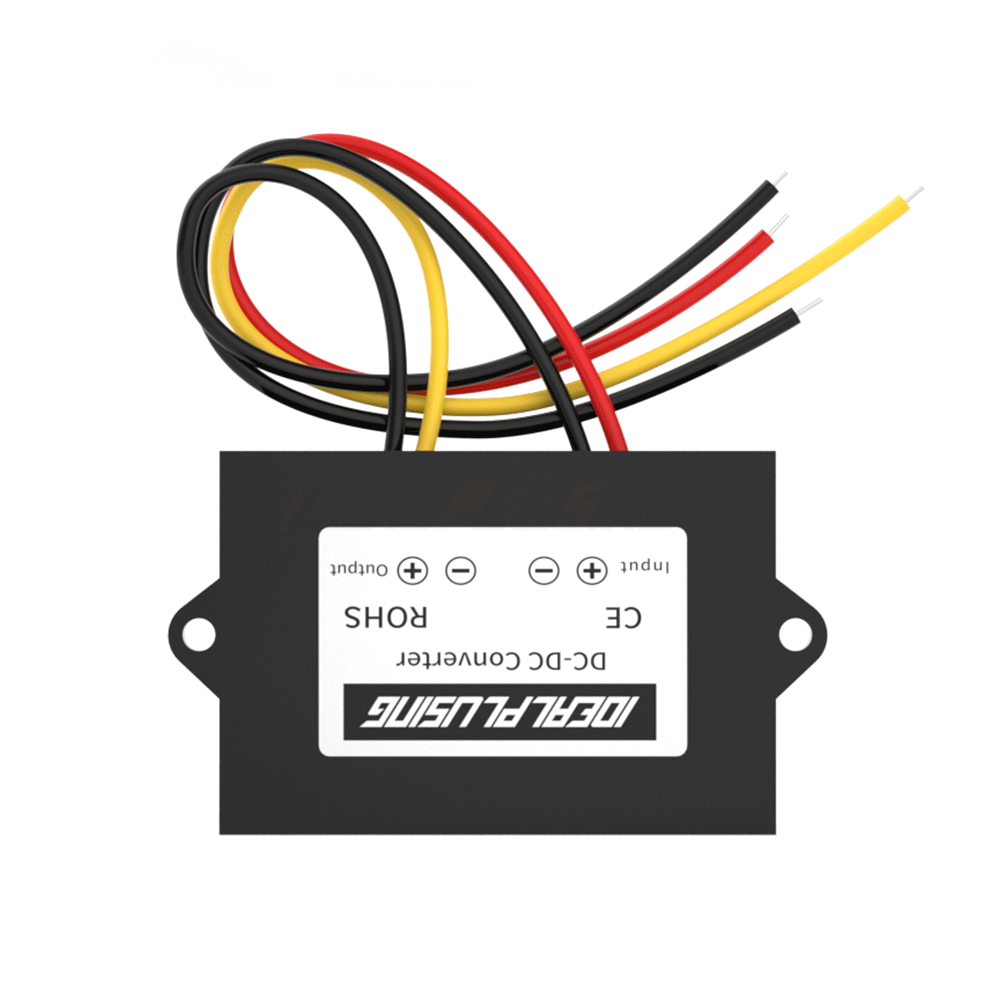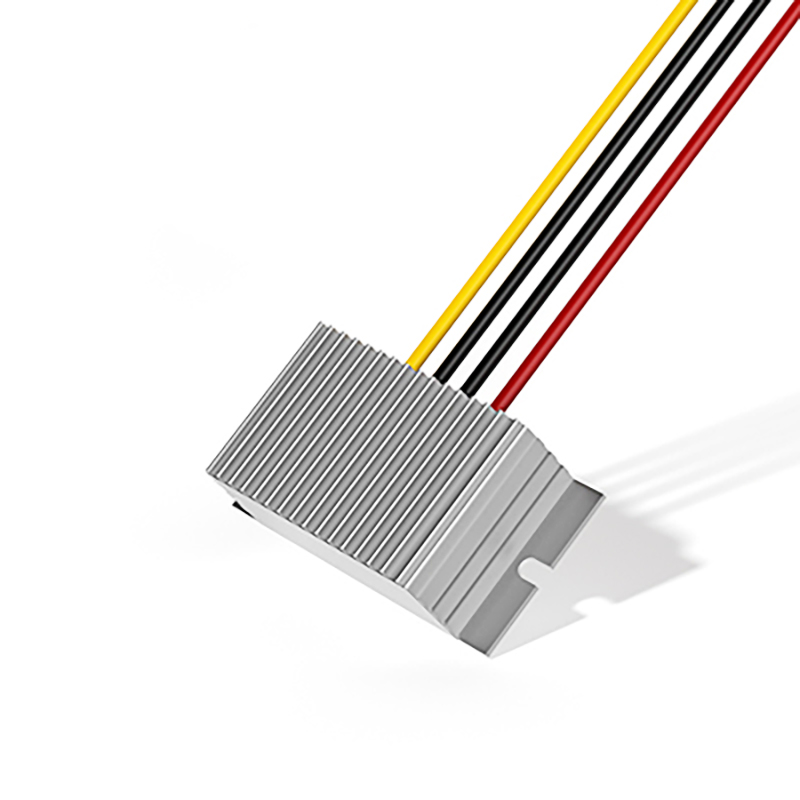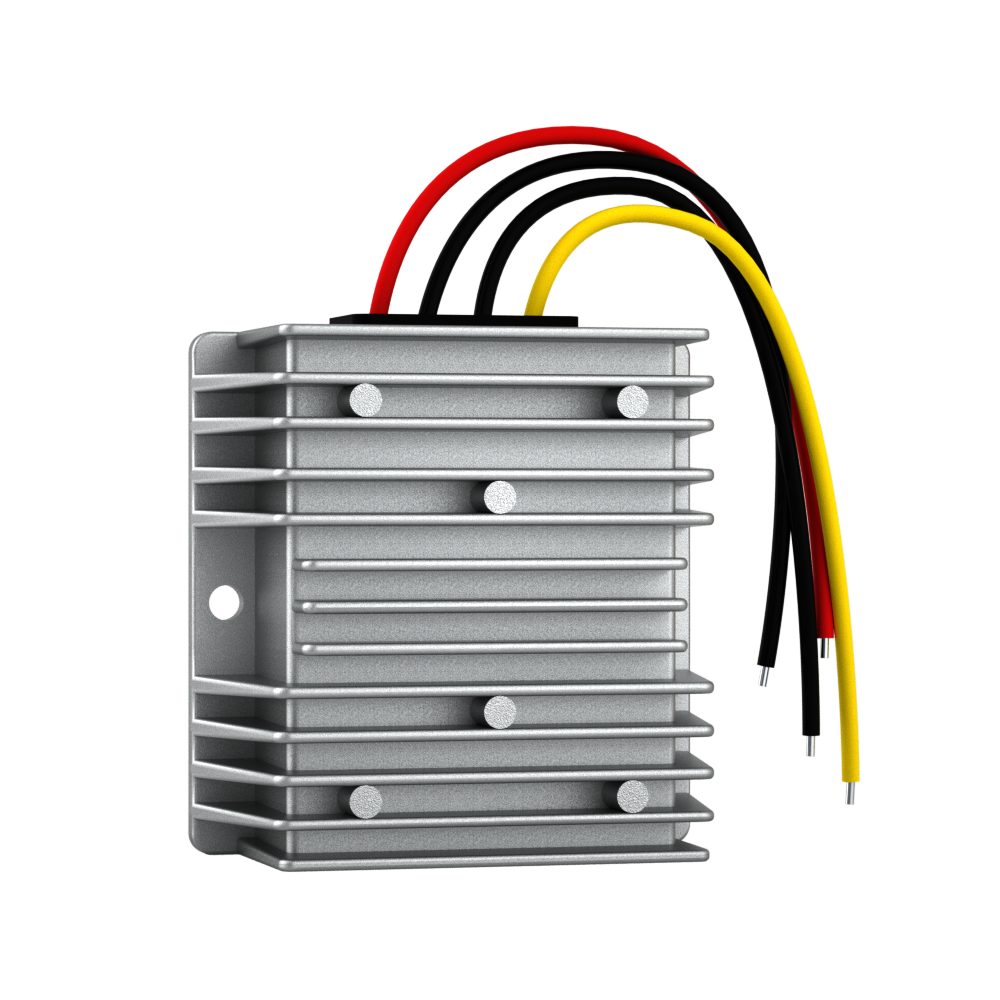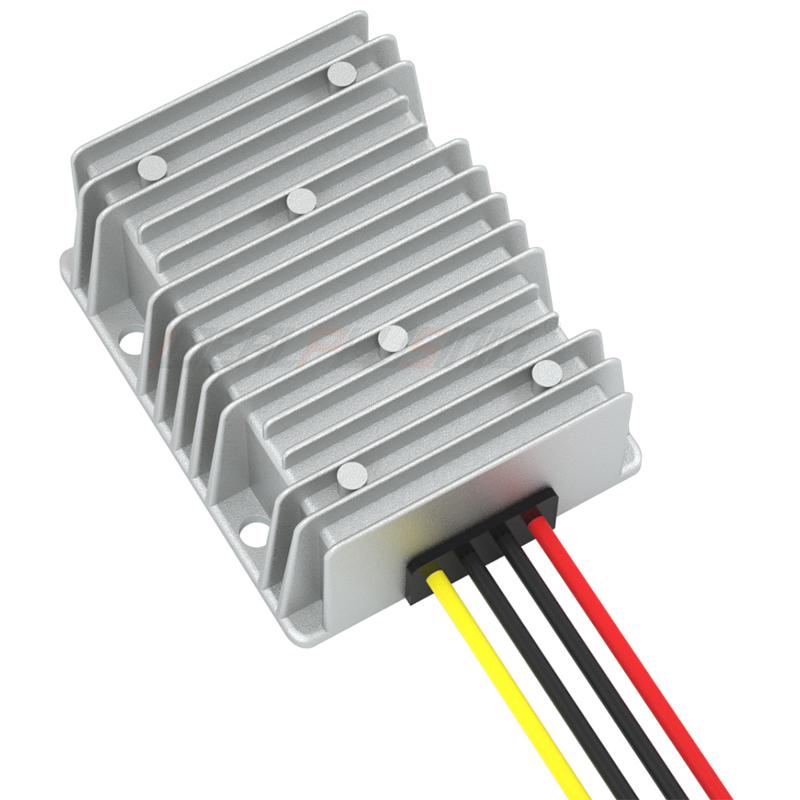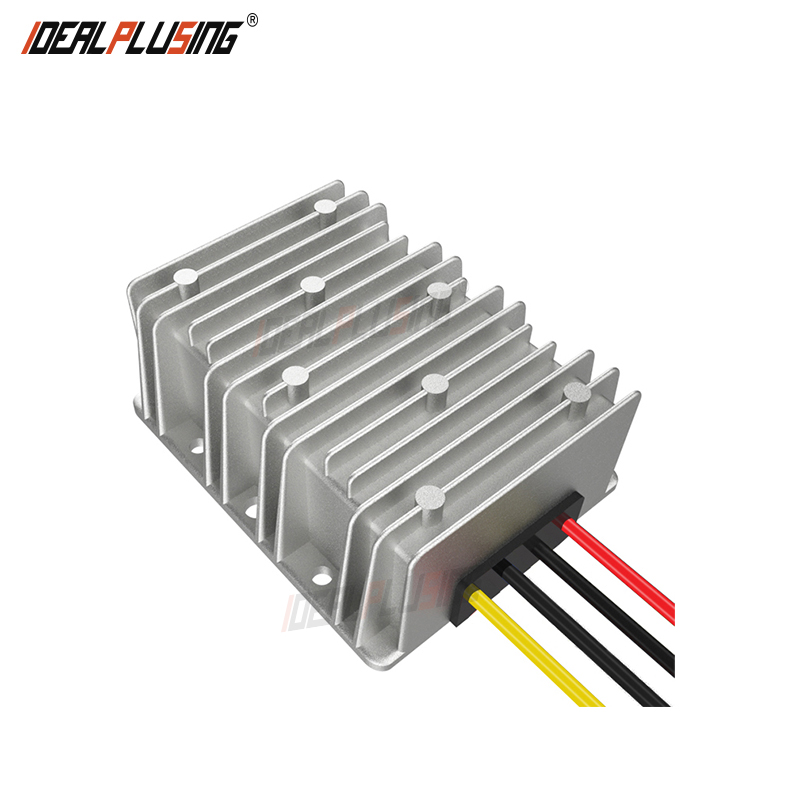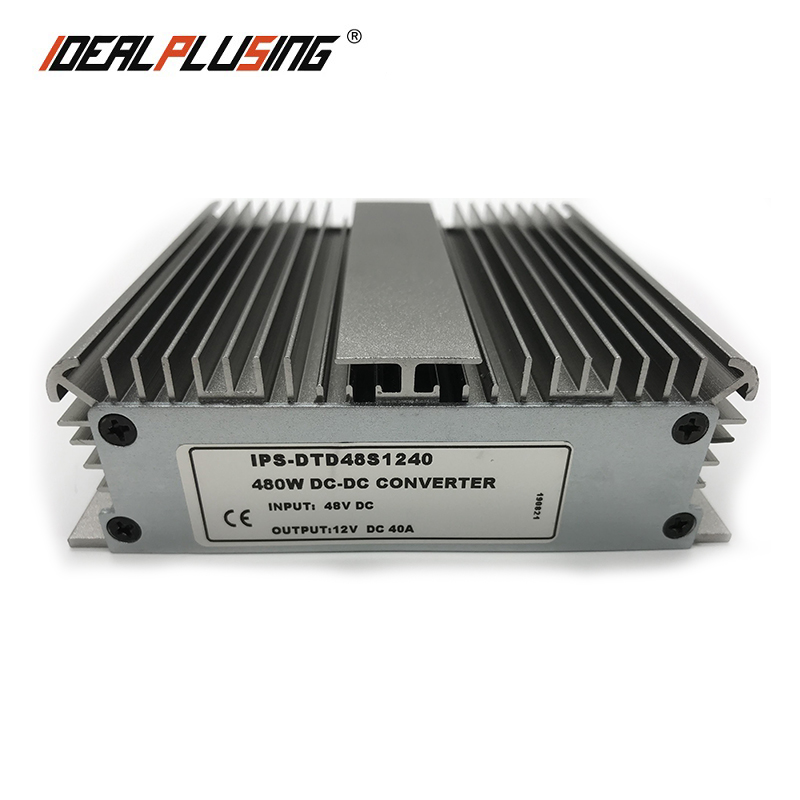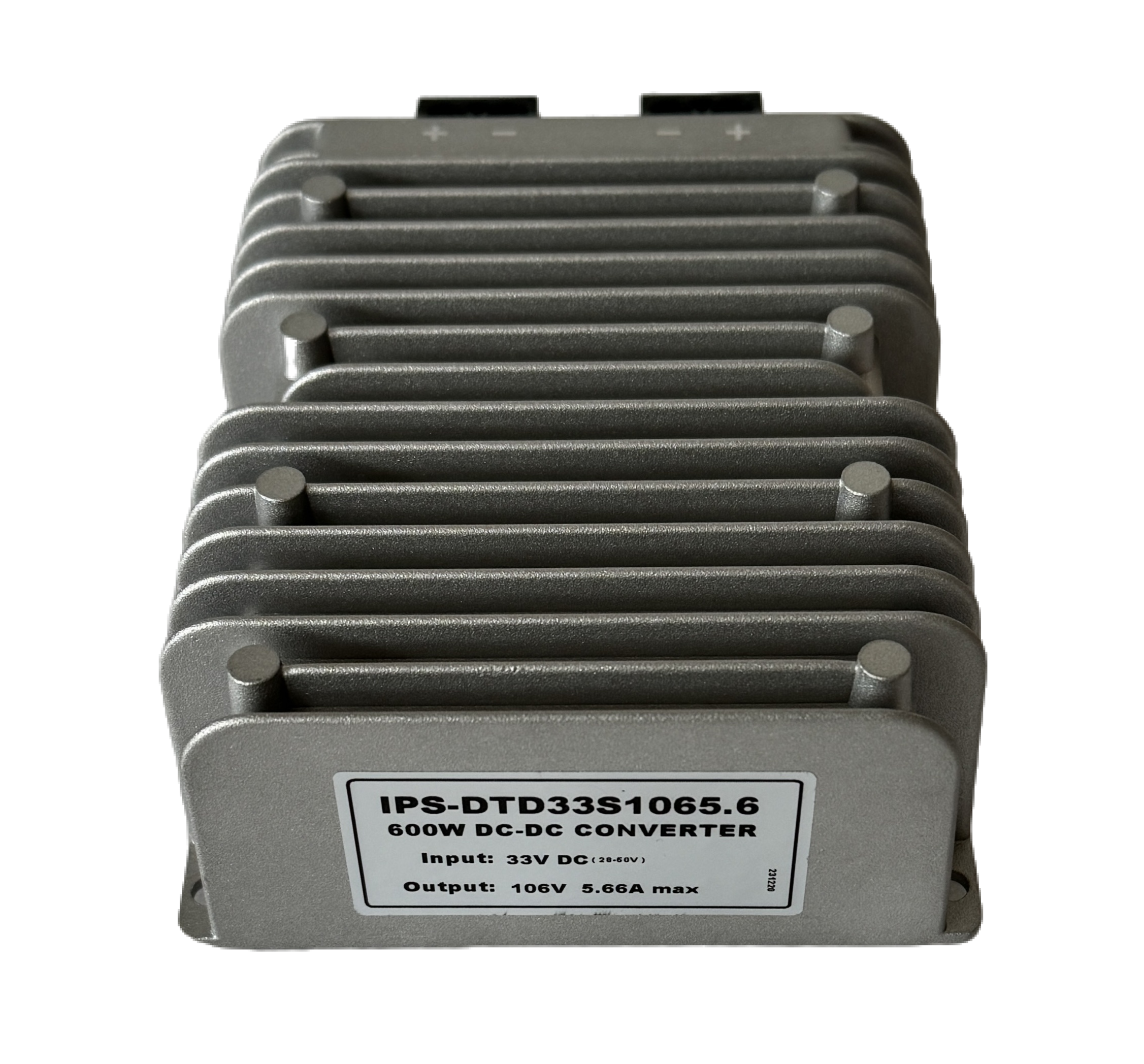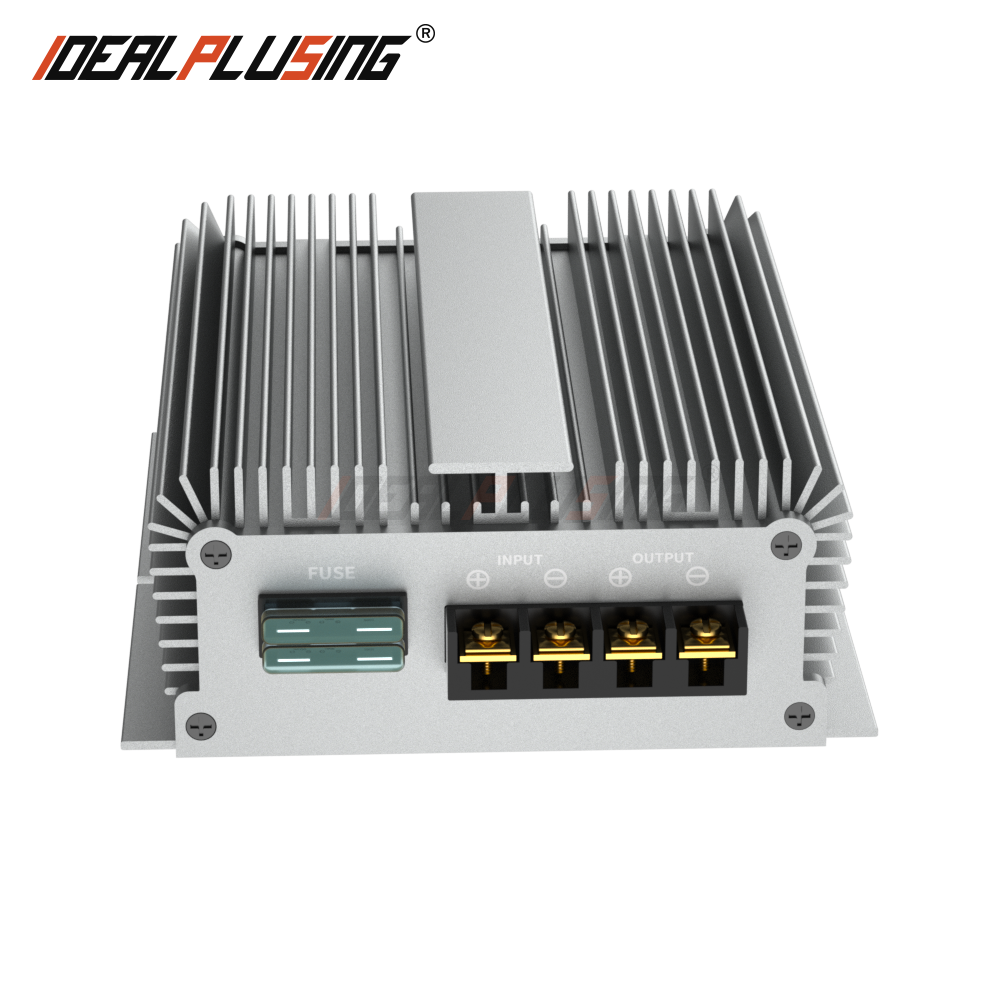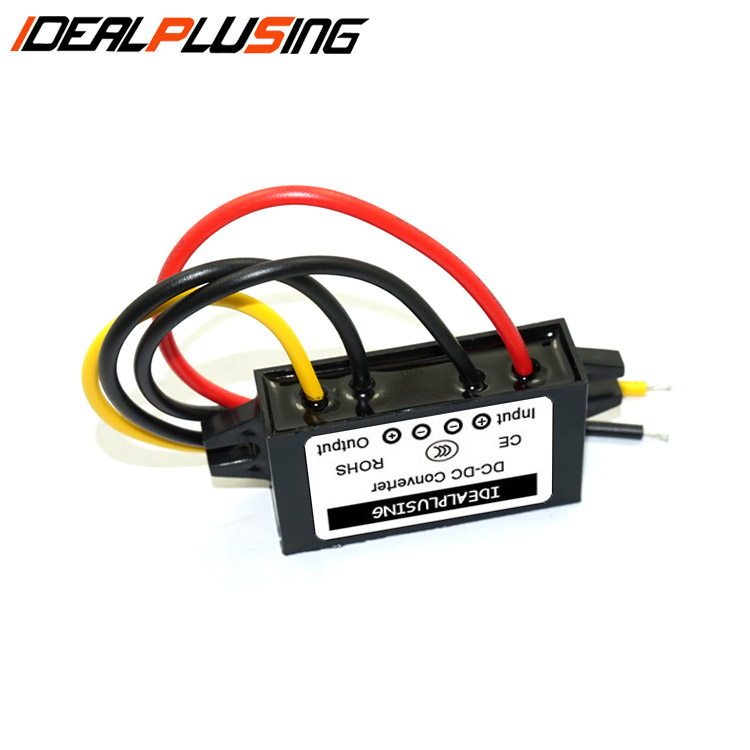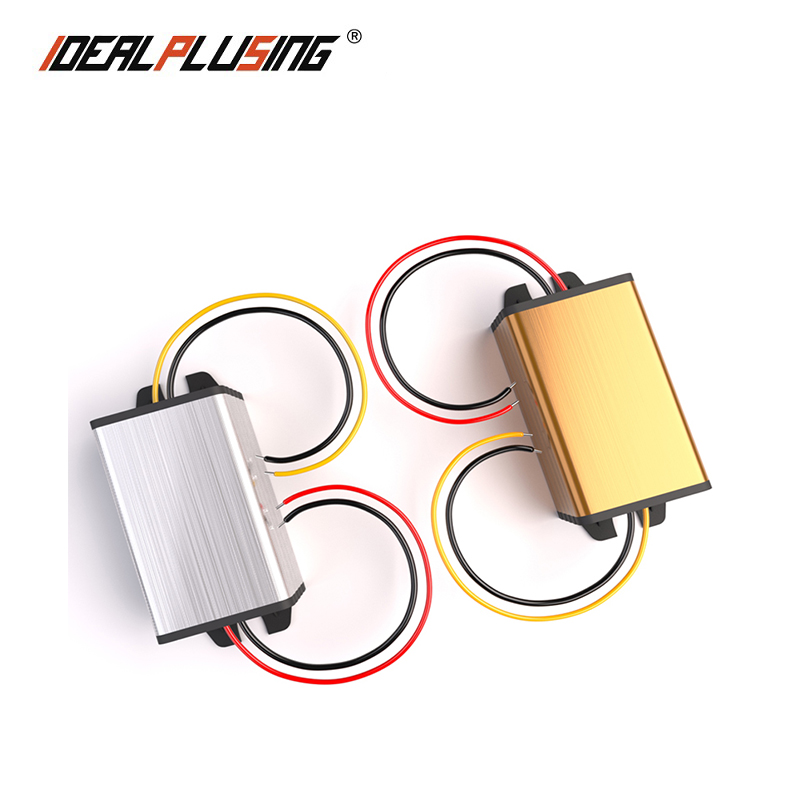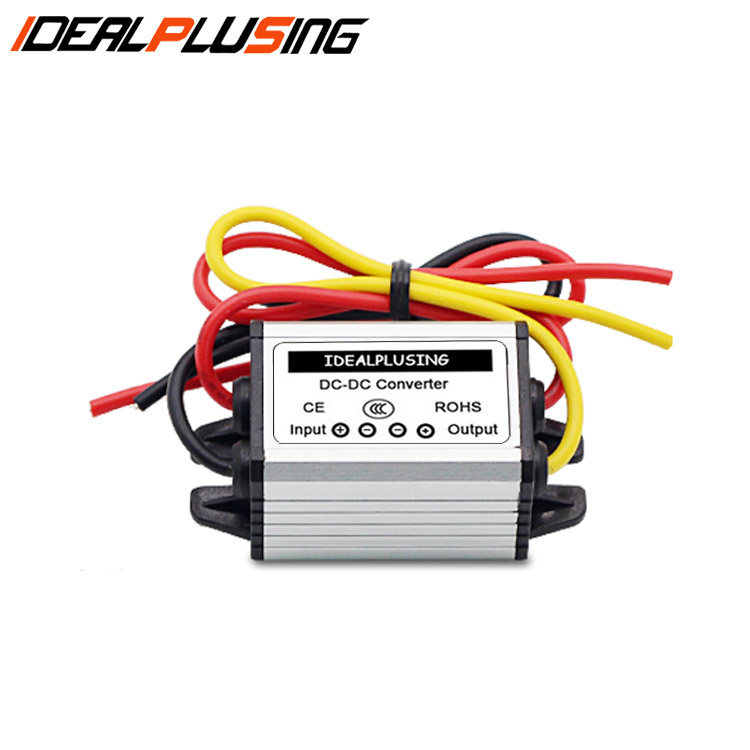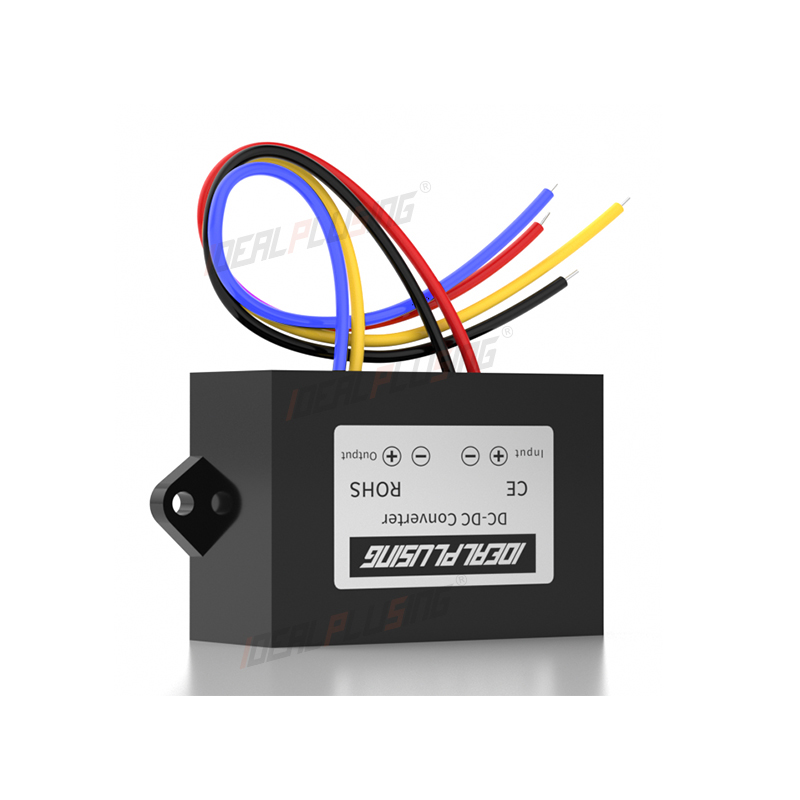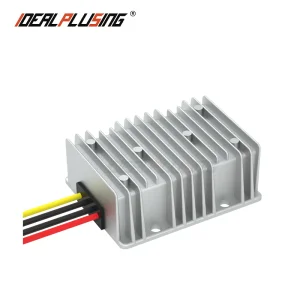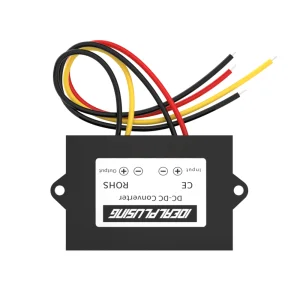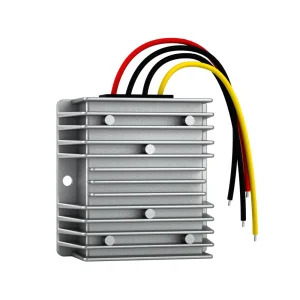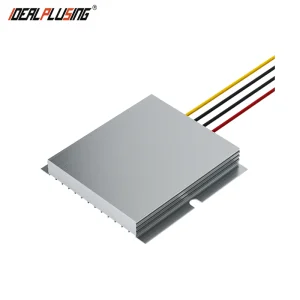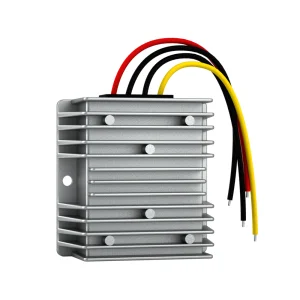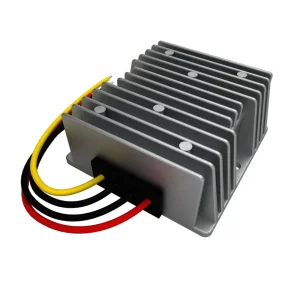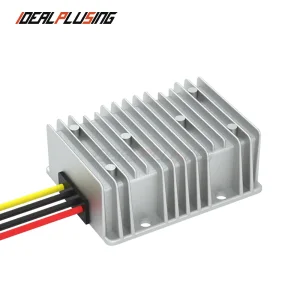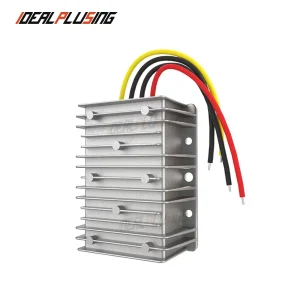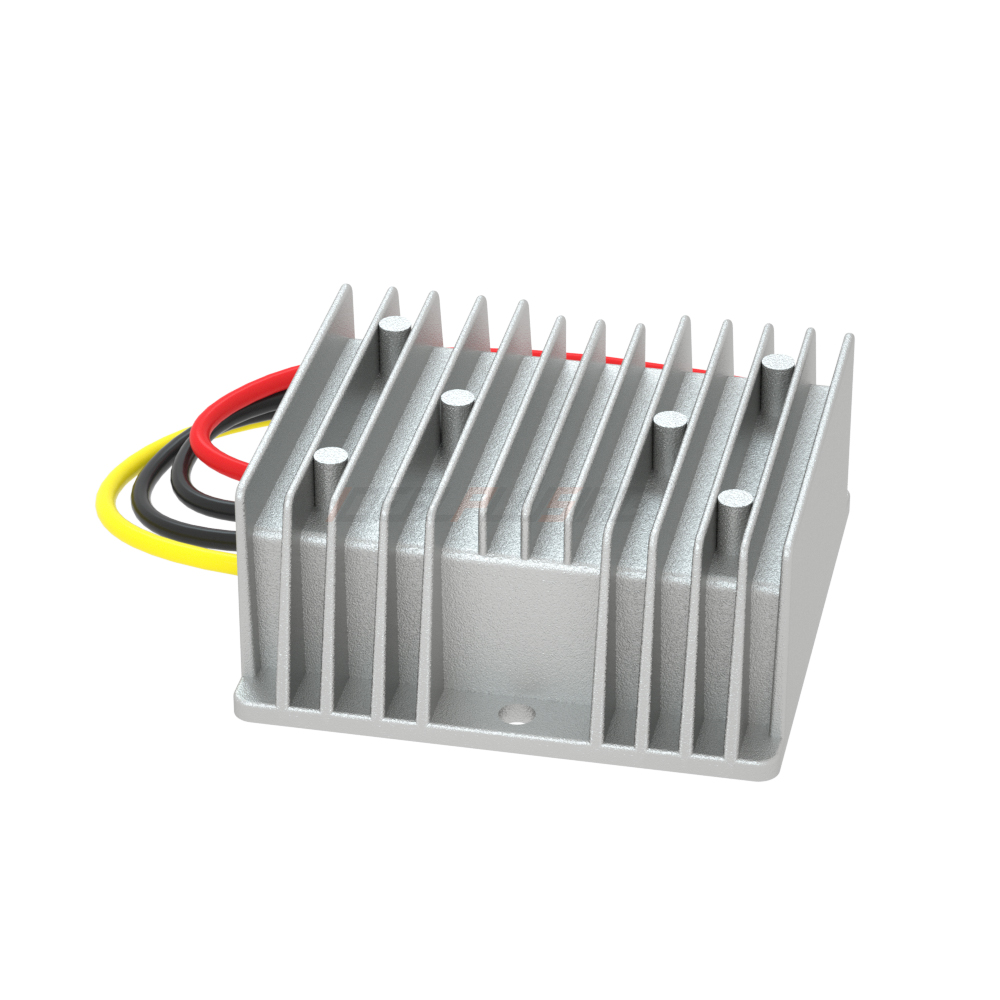
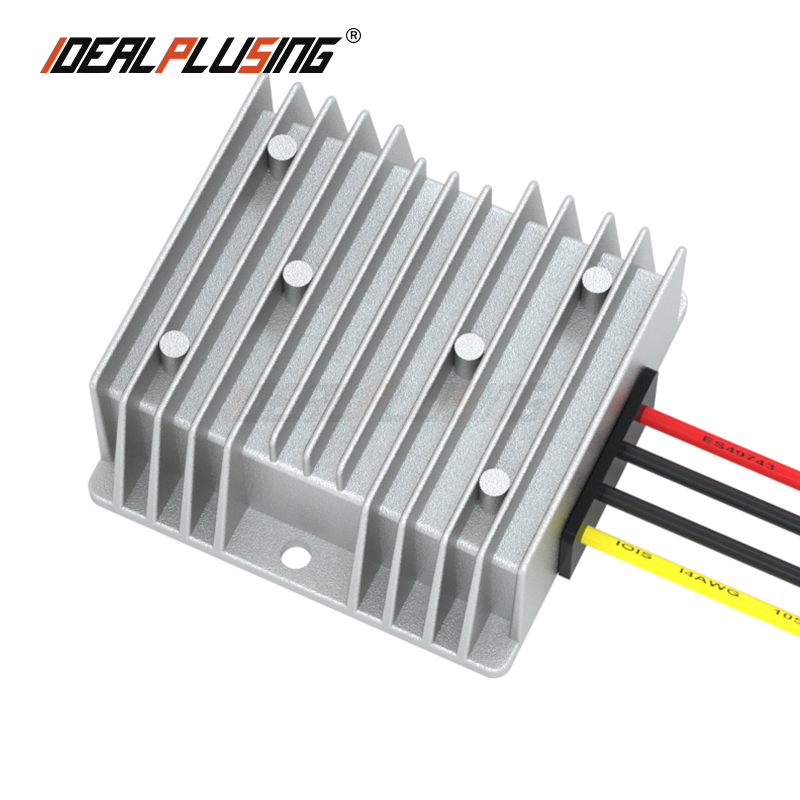
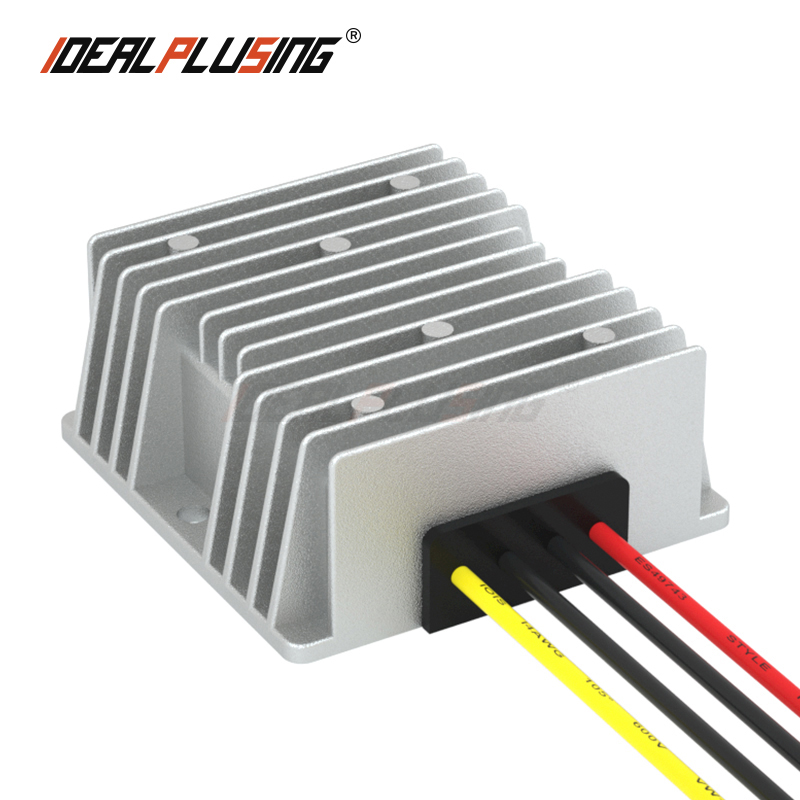
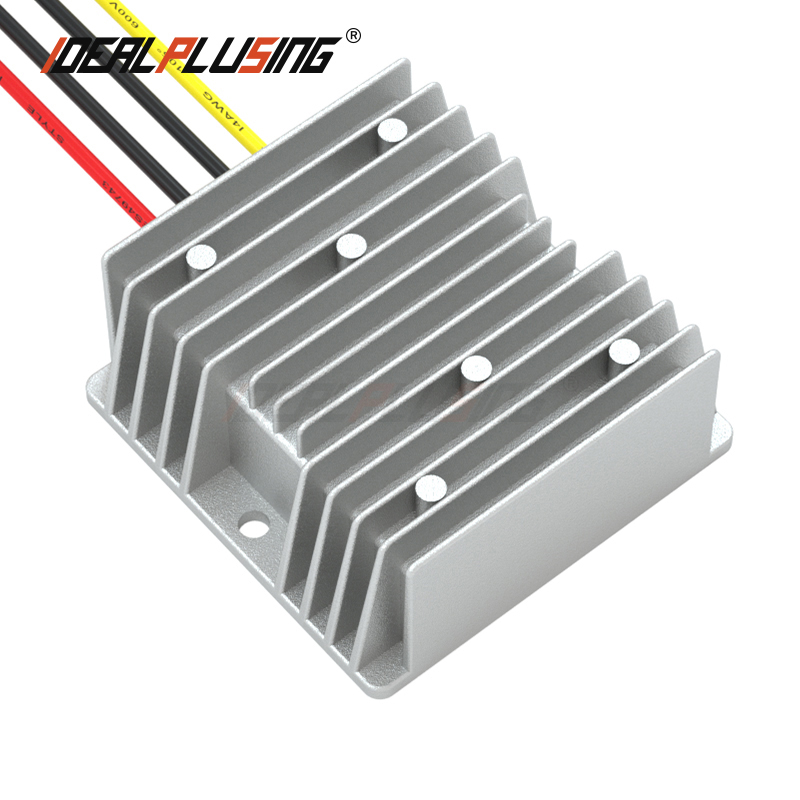
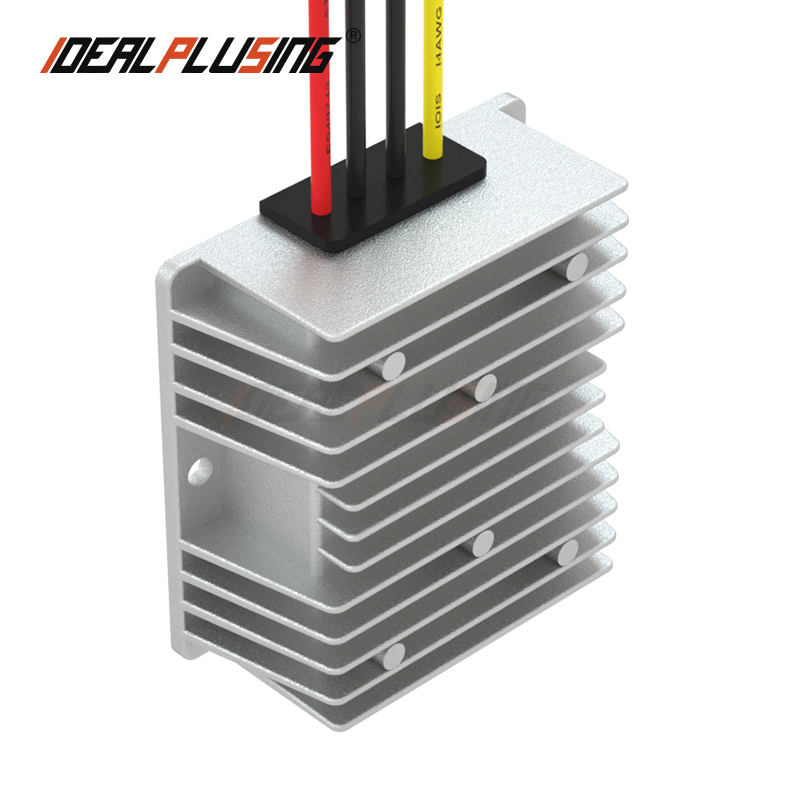
Durable and Stable Quality 72V 80V 84V 96V 100V (40-120V) Step Down Dc Buck Converter 100V to 12V 5A 8A 96W for Automobile&motor

Product Description

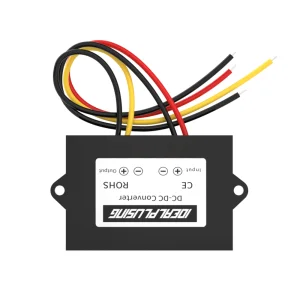
Durable and Stable Quality 72V 80V 84V 96V 100V (40-120V) Step Down Dc Buck Converter 100V to 12V 5A 8A 96W for Automobile & Motor
High-efficiency voltage regulation designed for demanding automotive and industrial applications.
Features
A DC/DC converter is a voltage converter which can effectively output fixed voltage after converting input voltage. DC/DC converters are divided into three categories: Boost type, boost & buck type, and buck type. Three kinds of control can be adopted according to the demand.
  • PWM Control: High efficiency, excellent output voltage ripple, and low noise control.
  • PFM Control: Low power consumption even during extended operational periods, particularly under small loads.
  • Automatic Conversion: Implements PFM control under light loads and automatically switches to PWM control during heavy loads.
  • Wide Applications: Widely used in mobile phones, digital cameras, portable media players, automotive systems, and other electronics.
DC Buck Converter
Capabilities & Customization
We focus on the research, development, and supply of DC to DC power modules, AC to DC rectifier modules, DC to AC inverters, AC power supplies, DC power supplies, LED power supplies, chargers, and rectifier systems. Our mission is to provide personalized, efficient, reliable, and cost-effective power supply solutions for all industries.
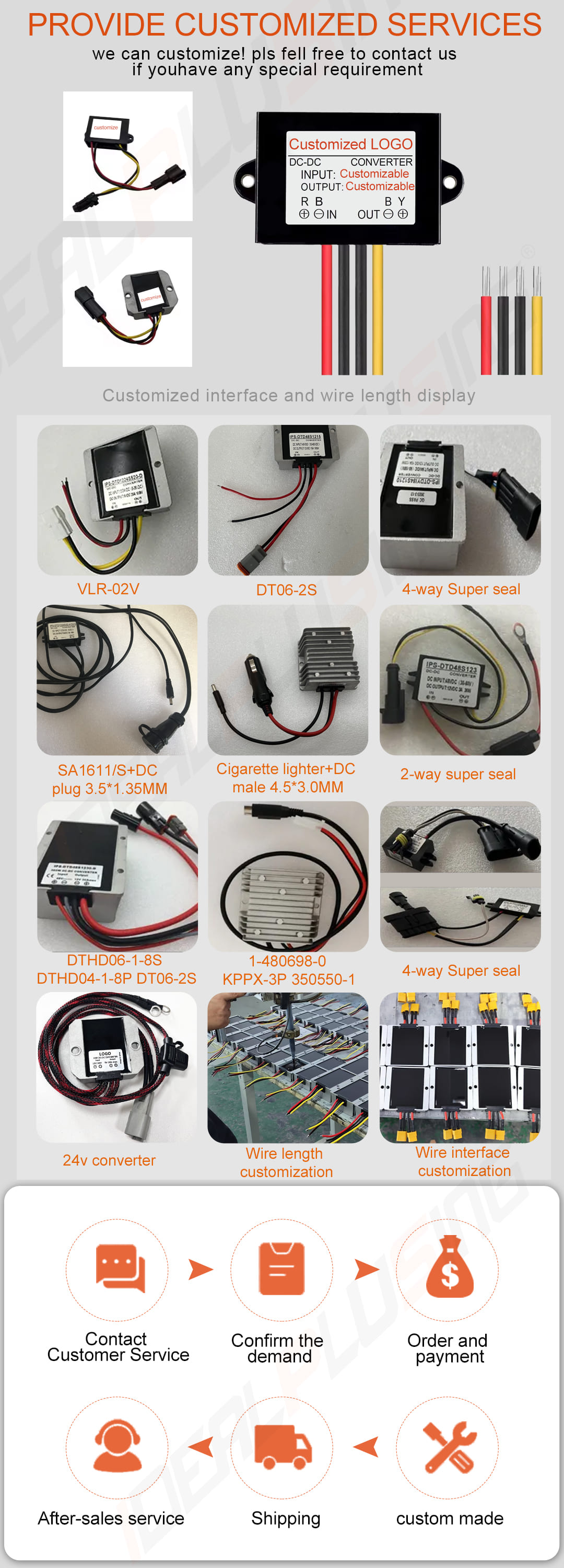
We specialize in customizing DC-DC converters to meet your specific requirements. With customized input/output voltage and current, our offerings range from 1V to 1000V DC and 1A to 1000A. We provide both isolated and non-isolated converter design options.
Our dedicated team endeavors to respond to inquiries within one hour to help design the optimal power configuration for your application.
Specifications
Parameter Details
Brand / OEM Customized Options Available
Type Non-isolated
Model Base on model selected
Input Voltage Base on model selected
Output Voltage Base on model selected
Output Current Base on model selected
Output Power Base on model selected
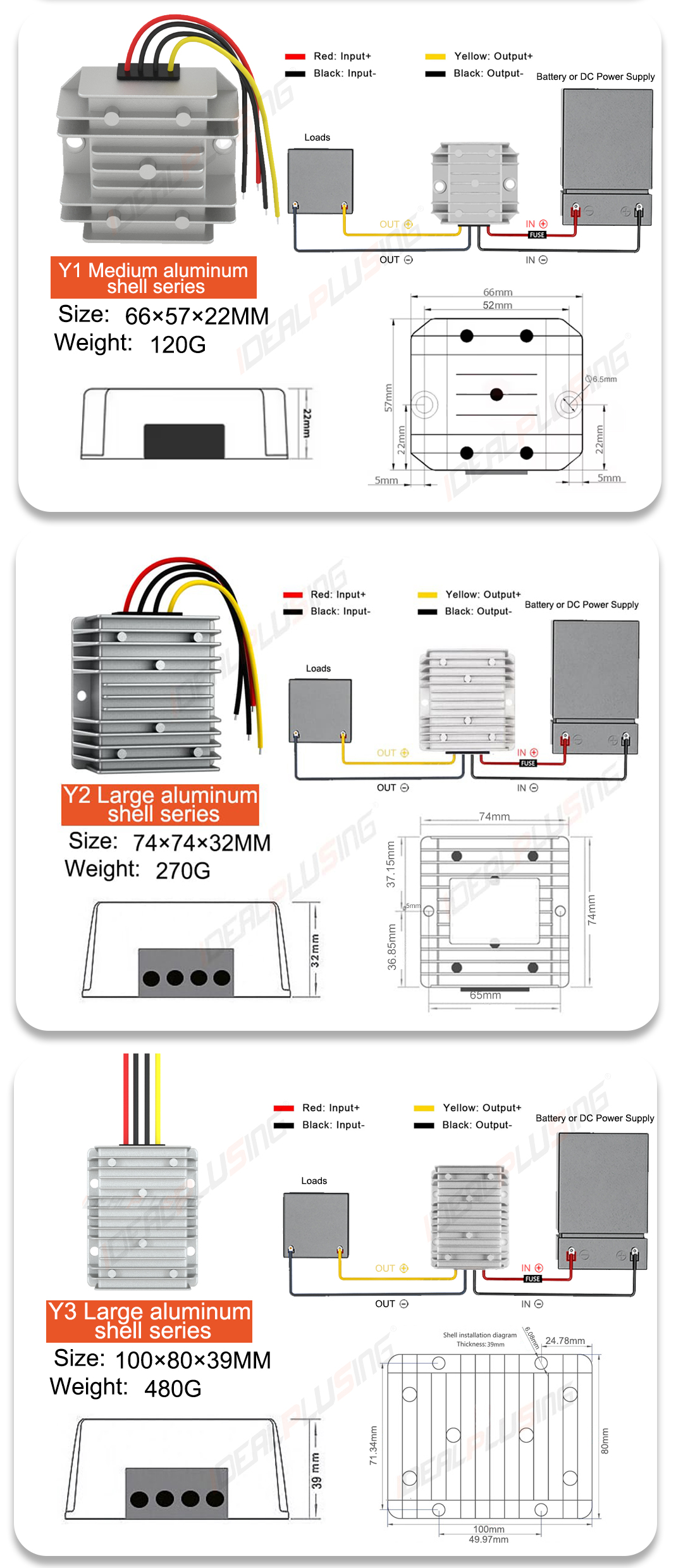
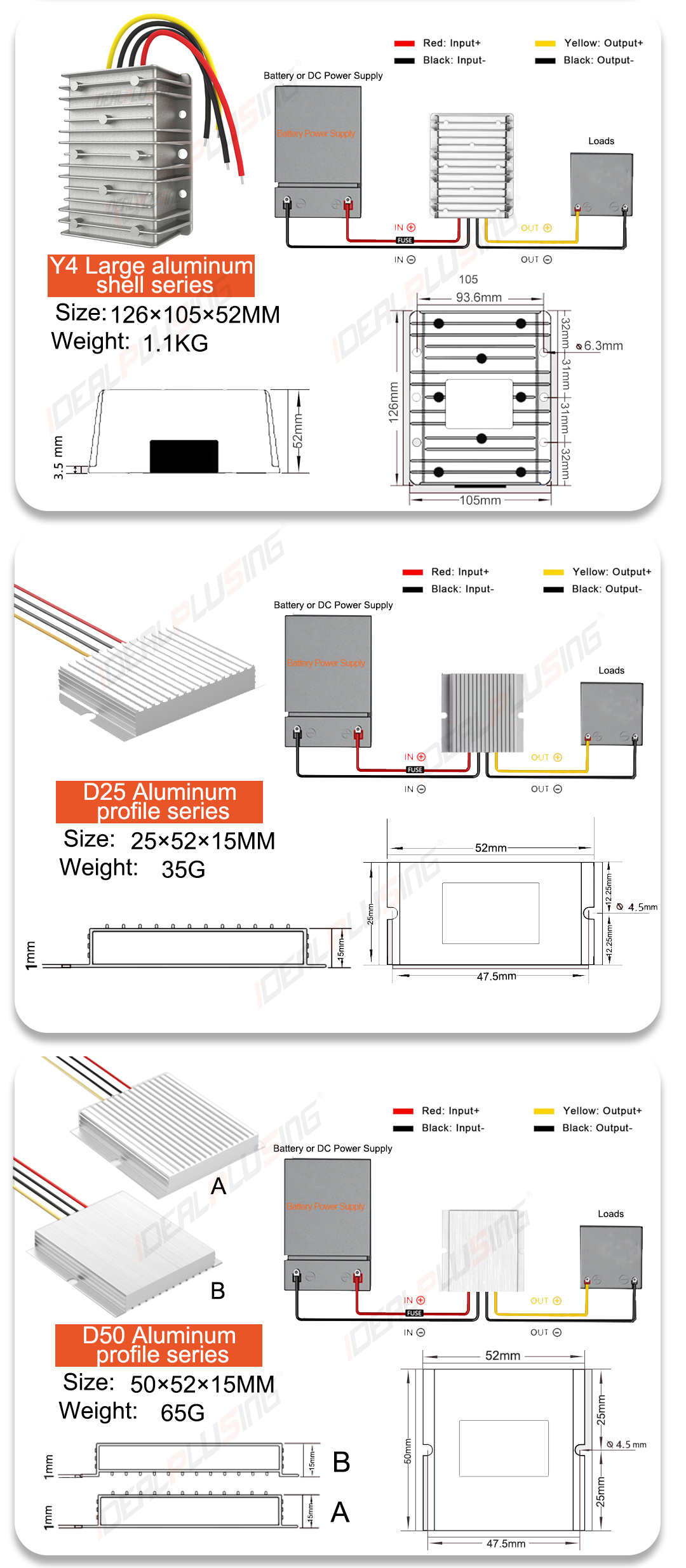
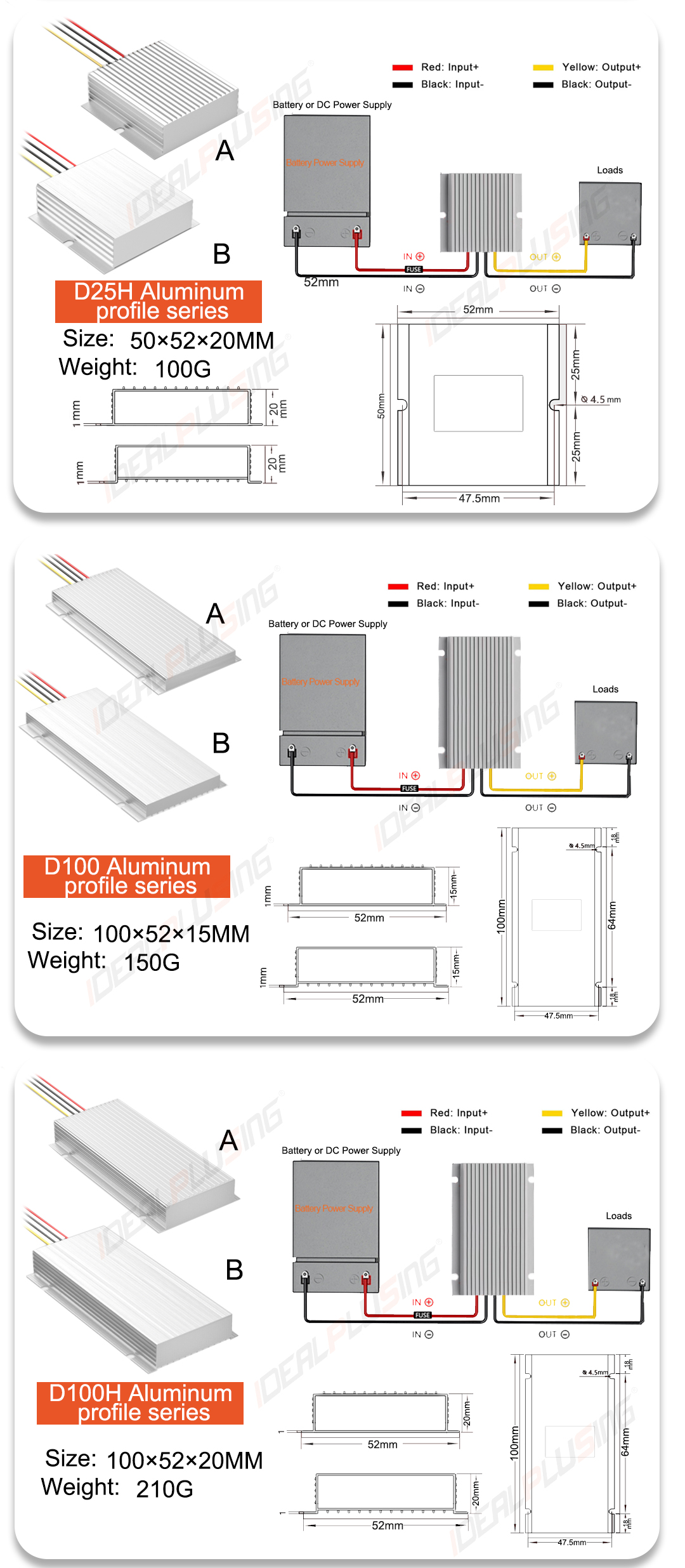
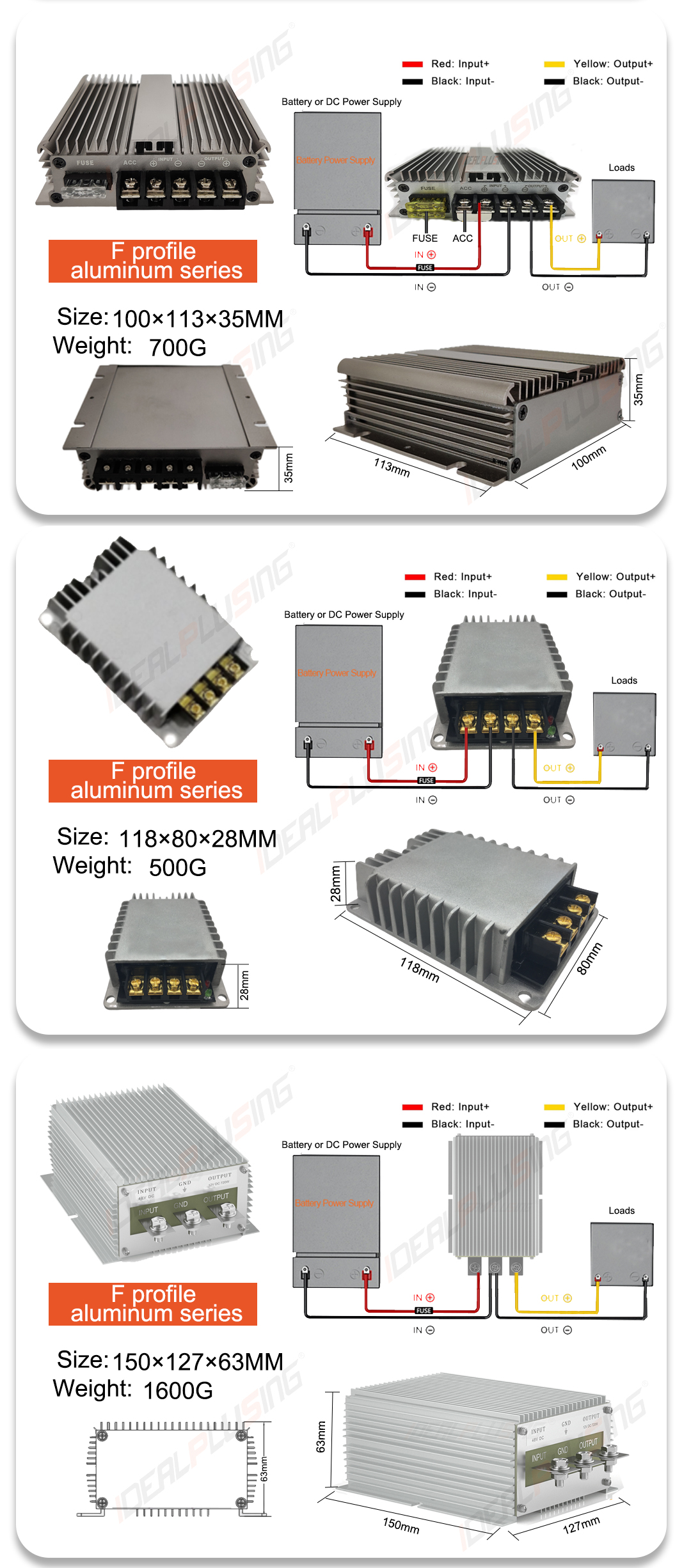
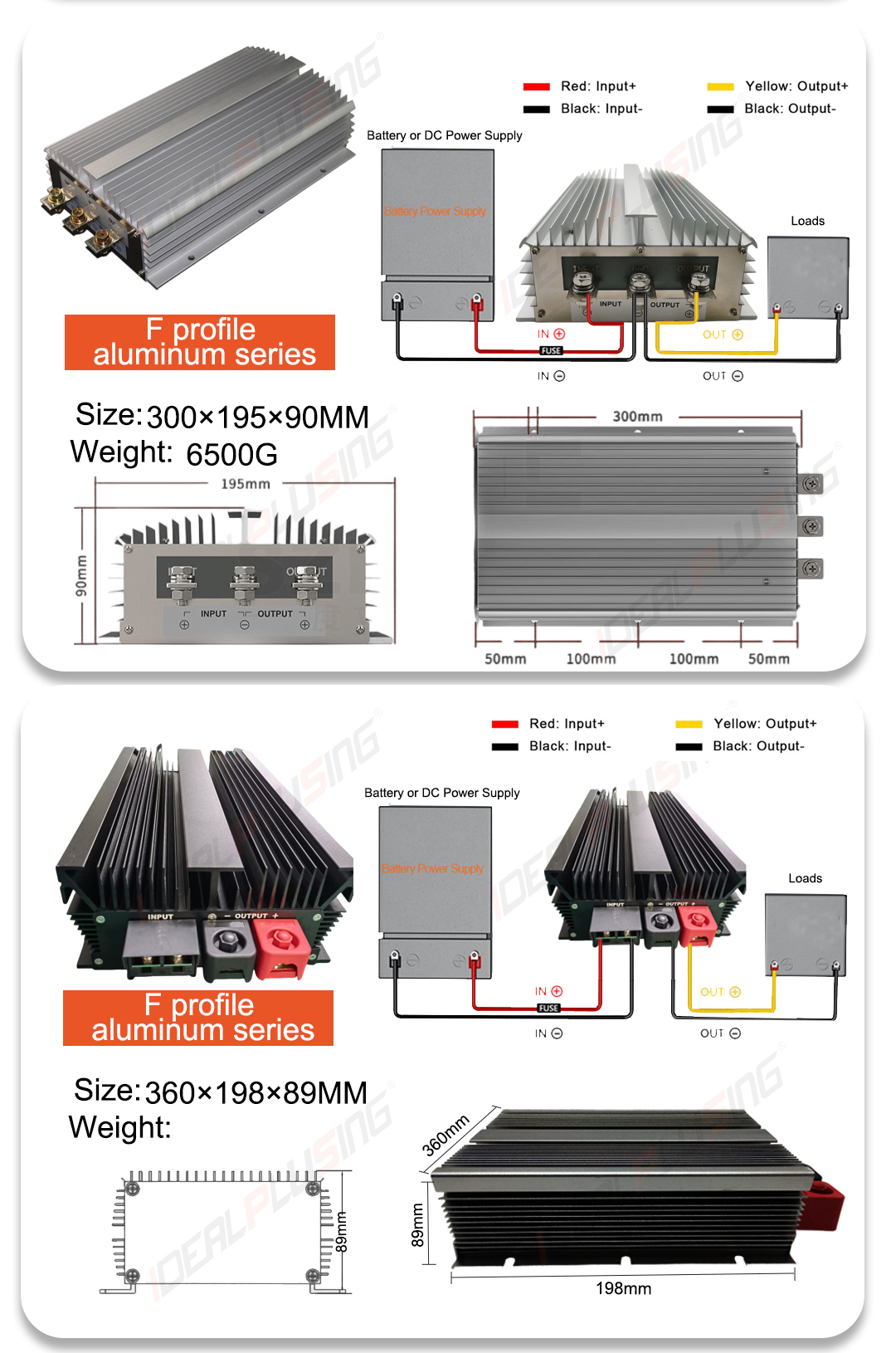
Shell Material Aluminum
Converter Size Base on model selected
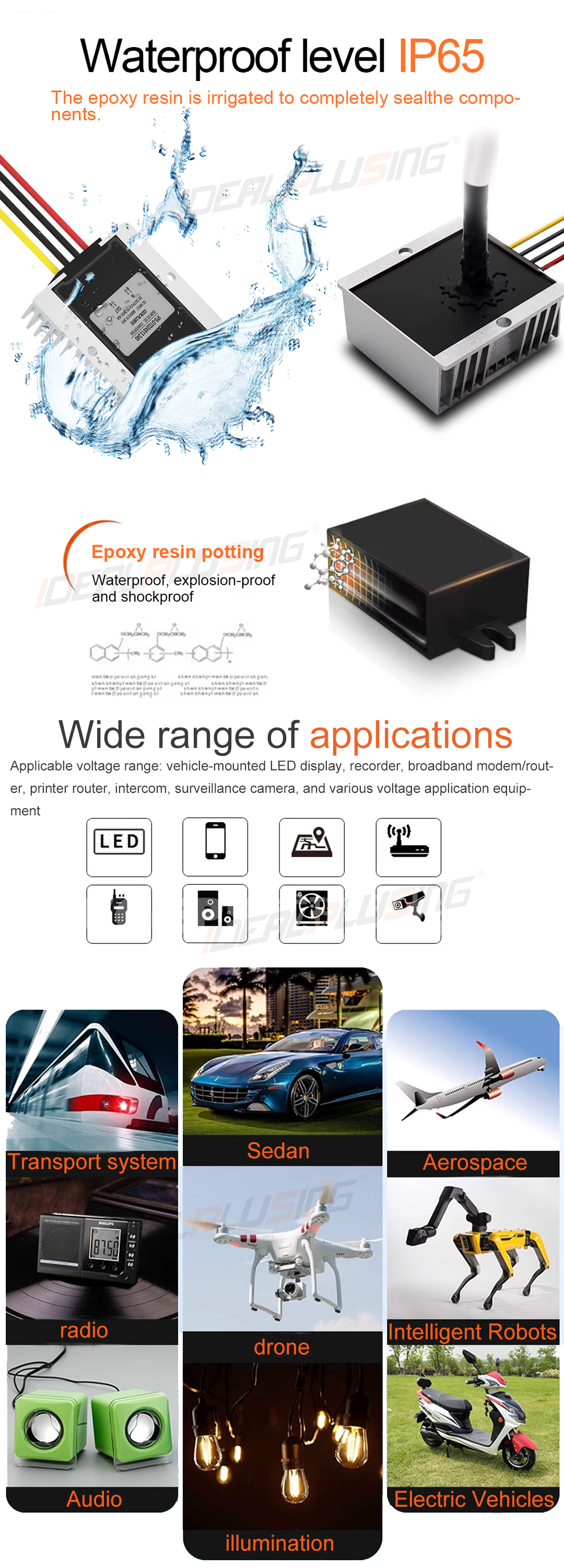
Waterproof Level IP67
Model List - Non-Isolated & Isolated
Type Model/Series Input to Output Output Current Options
DC-DC Boost Converter IPS-DTD5~11S12** 5~11V to 12V 1/2/3/4/5/8/10A
IPS-DTD12S15** 12V to 15V 1/2/3/4/5/8/10/12/15A
IPS-DTD12S24** 12V to 24V 1/2/3/4/5/8/10/12/15/20/25/30/40/50A
IPS-DTD24S48** 24V to 48V 2/3/5/6/10/15/20/30/40A
DC-DC Buck Converter IPS-DTD1224S5** 12/24V to 5V 1/2/3/4/5/6/8/10/15/20/30/40/50/60A
IPS-DTD24S12** 24V to 12V 1/1.5/2/3/4/5/6/8/10/12/15/18/20/22/25/28/30/40/50/60/85/100A
IPS-DTD48S12** 48V to 12V 1/2/3/5/6/8/10/15/20/25/30/50/60A
IPS-DTD72S12** 72V to 12V 1/2/5/8/10/12/15/20/30/40/50A
IPS-DTD96S12** 96V to 12V 1/2/5/8/10/12/15/20A
Boost & Buck IPS-DTD8~40S12* 8~40V to 12V 1/2/3/6/10/15/20/25A
IPS-DTD9~40S24* 9~40V to 24V 2/3/4/6/10A
Isolated Step Down IPS-DTDYI24S12* 9-36V to 12V 1/2/3/4/5/10/15/20A
IPS-DTDYI48S12* 30-60V to 12V 1/1.5/3/5/8A/10A/20A
IPS-DTDYI72S12* 50-100V to 12V 5/8/10/15/18/20/24A
IPS-DTDI48-120S12* 48V-120V to 12V 5/10/20/25/30/40/50/60/70/80/90/100/125A
DC-DC Battery Chargers
Series Compatible Battery Types Input Voltage Rated Output Voltage Output Current Options
IPS-DTDYC* Lithium(3S/6S) / LiFePO4(4S/8S) / Lead Acid(1S/2S) 10-36V / 18-36VDC 12.6/25.2/14.6/29.2/14.7/29.4VDC 1/2/3/4/5/8/10/15/20A
IPS-DTDWC* Lithium(3S/7S) / LiFePO4(4S/8S/12S) 10-36VDC 12.6/29.4/29.2/43.8VDC 10/15/20A
IPS-DTDEC* Lithium(3S) / LiFePO4(4S) / Lead Acid(1S) 8-16VDC 12.6/14.6/14.7VDC 20/40/60A
CAN DC-DC Chargers
Power Rating Rated Input Input Range Rated Output Adjustable Output Range
0.6kW Step-down 72VDC/10A 50~100VDC 14VDC @ 42A 0-16VDC
1.2kW Step-down 144VDC/18A 80~200VDC 14VDC @ 85A 0-16VDC
2.4kW Step-down 360VDC/16A 200~450VDC 14VDC @ 170A 0-16VDC
3.6kW Step-down 540VDC/15A 400~700VDC 27VDC @ 126A 0-32VDC
Industrial Isolation Small Power
Series Rated Input Voltage (VDC) Output Voltage (VDC) Output Current (A)
IPS-MD* 18/24/48/110VDC 12/24/05&12/12&24VDC 3.13/4.16/6.25/8.33/3&4/1.5&2A
IPS-MDB* 18/24/48/110/550/600/650/800VDC 12/15/24/48/05&12/12&24/05&24VDC 2.67/3.13/4.16/6.25/8.33/12.5/4&4.16/10&4.16A
Industrial Isolation High Power
DC Input Voltage DC Output Voltage Continuous Power Options Efficiency
12V ± 15% 12V ± 1-2% 100W, 200W, 300W, 400W, 500W, 600W, 750W, 1000W, 2000W, 3000W, 4000W, 5000W, 6000W, 7500W, 8000W (Continuous rating: Peak * 80%) 90 ± 4%
24V ± 15% 24V ± 1-2% 90 ± 4%
48V ± 15% 48V ± 1-2% 90 ± 4%
110V ± 15% 110V ± 1-2% 90 ± 4%
19-inch Rack Mount DC-DC Converters
Model Input (VDC) Output (VDC) Output Current (Amps)
IPS-DTD24S**** 24VDC (20-32VDC) 48/110/125VDC 5/10/20/30/40/50A
IPS-DTD48S**** 48VDC (40-60VDC) 48/24/110/125/220VDC 5/10/20/30/40/50A
IPS-DTD110S**** 110VDC (90-140VDC) 24/48/110/220VDC 5/10/20/30/40/50A
IPS-DTD220S**** 220VDC (180-270VDC) 24/48/110/125/220VDC 5/10/20/30/40/50A
Hot Selling Models
DC DC Converter
IPS-DTD30-60S1210

Type: Non-Isolated
DC DC Converter
IPS-DTD20-100S122

Type: Non-Isolated

DC DC Converter
IPS-DTD15-40S1210

Type: Non-Isolated

DC DC Converter
IPS-DTD50-60S488

Type: Non-Isolated

DC DC Converter
IPS-DTD50-60S488

Type: Non-Isolated

DC DC Converter
IPS-DTD48S1240

Type: Non-Isolated

DC DC Converter
IPS-DTD28-50S1065.6

Type: Non-Isolated

DC DC Converter
IPS-DTD30-90S2440

Type: Non-Isolated

DC DC Converter
IPS-DTD30-60S1260

Type: Non-Isolated

Product Shows
Product Show 1
Show Gallery 1
Show Gallery 2
Show Gallery 3
Show Gallery 4
Show Gallery 5
Show Gallery 6
Industrial Application
Production Facility
Product Categories Overview
Certification Showcase
Testing Procedures
Detailed Images
Detail Angle 1
Detail Angle 2
Detail Angle 3
Sub-component A
Sub-component B
Sub-component C
Sub-component D
Technical Description & Application Guidelines
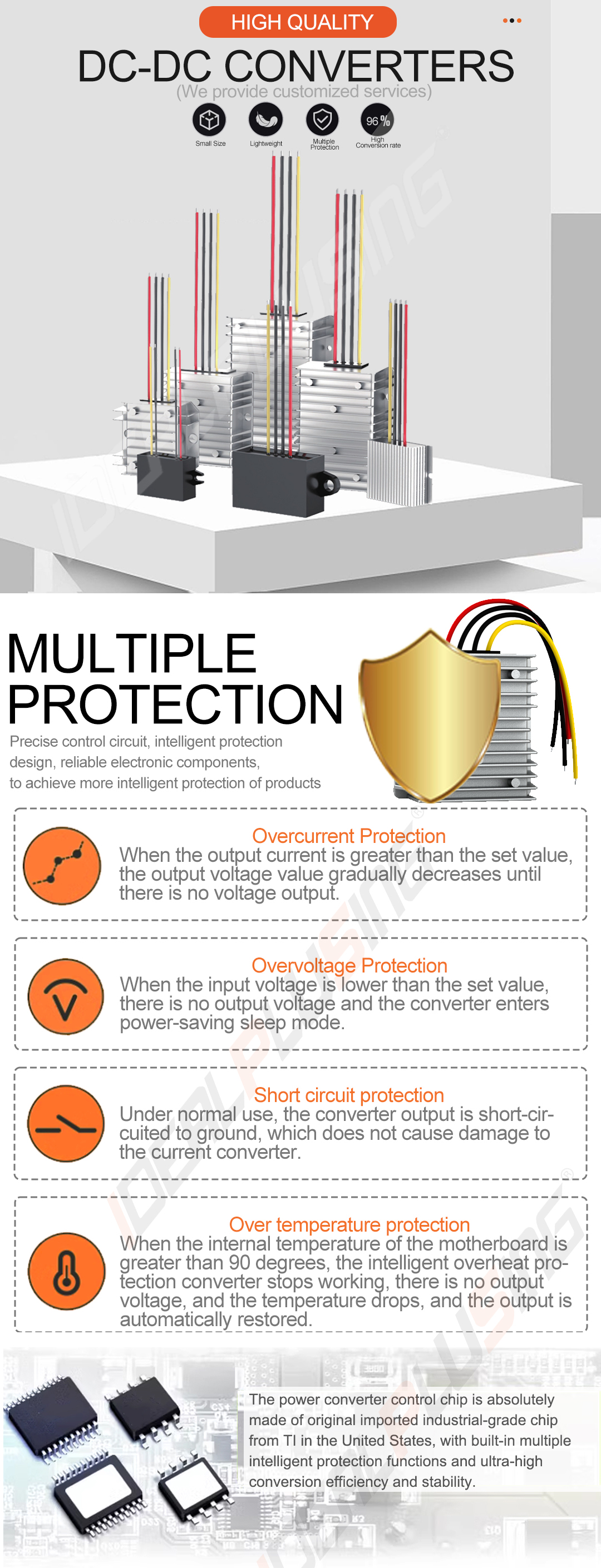
  • 1 All buck-boost and step-up/step-down products come standard with output overcurrent protection, output short-circuit protection, input undervoltage protection, and chip overheating protection. Large power supply products include over-temperature protection on the circuit board or casing (typically triggered at approximately 90°C).
  • 2 Due to circuit design constraints, step-up series products lack integrated output short-circuit protection and undervoltage shutdown functions. Fuses should be added at the input end to protect the input source.
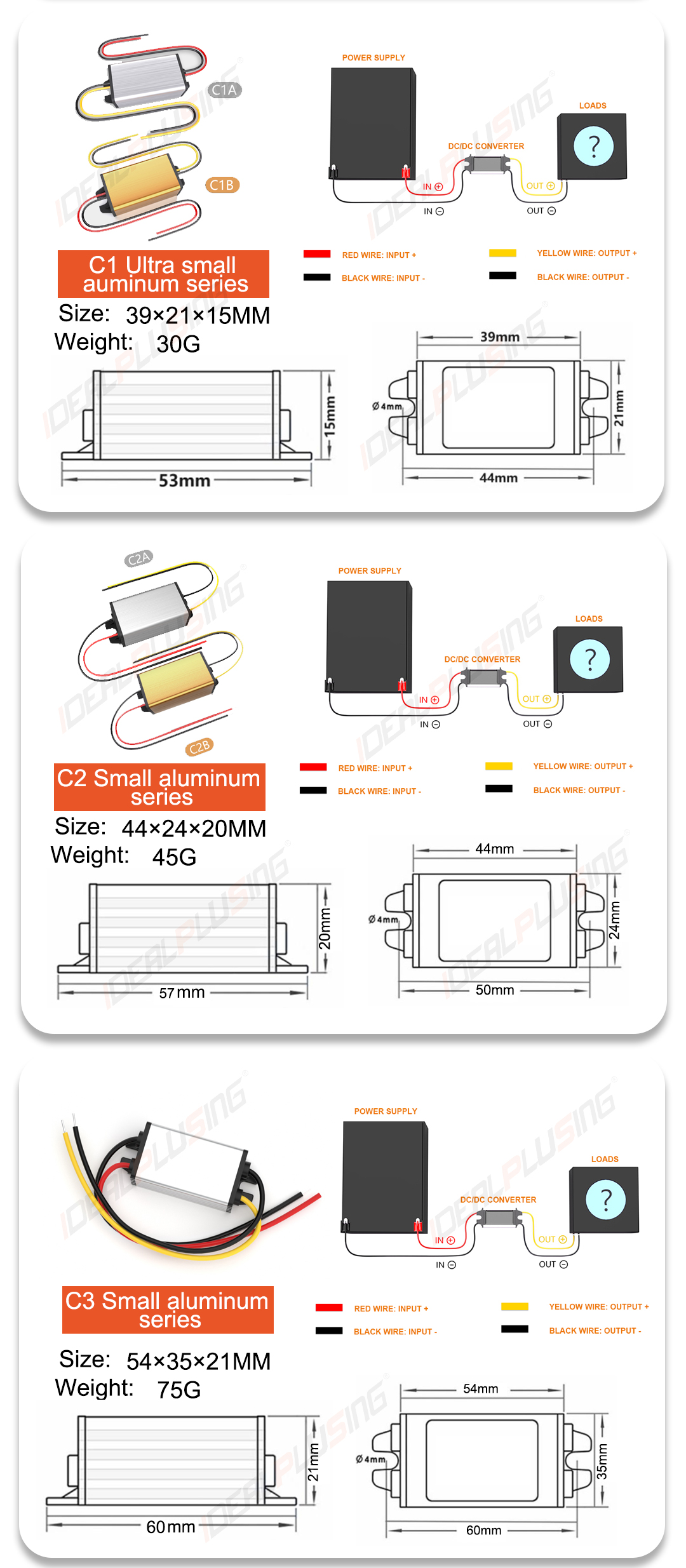
  • 3 Gold-colored small aluminum casing modules are optimized for high temperature resistance and reliability in high-demand, outdoor applications.
  • 4 Hard gel encapsulated products cannot be repaired (excluding selected 500W models with extra-large aluminum shells) and must be returned/replaced if damaged.
  • 5 For enhanced system safety, install fuses to prevent short circuits, diodes to prevent reverse current flow, and overvoltage protection circuits to prevent pass-through damage.
  • 6 For inductive loads (coils, magnetic valves, speakers, etc.) and motors, choose a power supply rated for 3-5 times the load's continuous rated power to manage start-up surges.
  • 7 Single bulb loads generally require a constant current source. Select charging-specific products for batteries, motor-specific models for motor loads, and load-sharing models for parallel configurations.
  • 8 The worst failure mode of a non-isolated buck converter is passing the high input voltage directly to the output. For valuable equipment loads, isolated power supplies are strongly recommended.
  • 9 For non-isolated boost converters, an input short circuit can burn the cabling. Adding a fuse at the input prevents this. Isolated boost converters are rarely required for typical applications.
  • 10 The failure mode of non-isolated buck-boost converters shares characteristics with both step-up and step-down types. Isolated configurations are recommended for expensive loads.
  • 11 The negative poles (ground) of isolated converters must remain separated; linking input and output ground connections disables the isolation barrier.
  • 12 For systems where input voltage is at least three times the output voltage, isolated converters are highly recommended to ensure safety and system longevity.
  • 13 Isolated converters generally support smaller input voltage ranges and offer narrower output adjustability windows compared to non-isolated equivalents.
  • 14 Isolated modules support negative voltage inputs, delivering either positive or negative output polarity. Connect the 0V reference line to the red wire, and the negative potential to the black wire.
  • 15 Developing isolated converter prototypes requires structural transformer redesign and parameters adjustments, which may extend project delivery lead times.
  • 16 Isolated power supplies present no risk of passing high input voltage directly to critical loads, making them the safest power supply variant. Over 90% of global electronics rely on isolated designs.
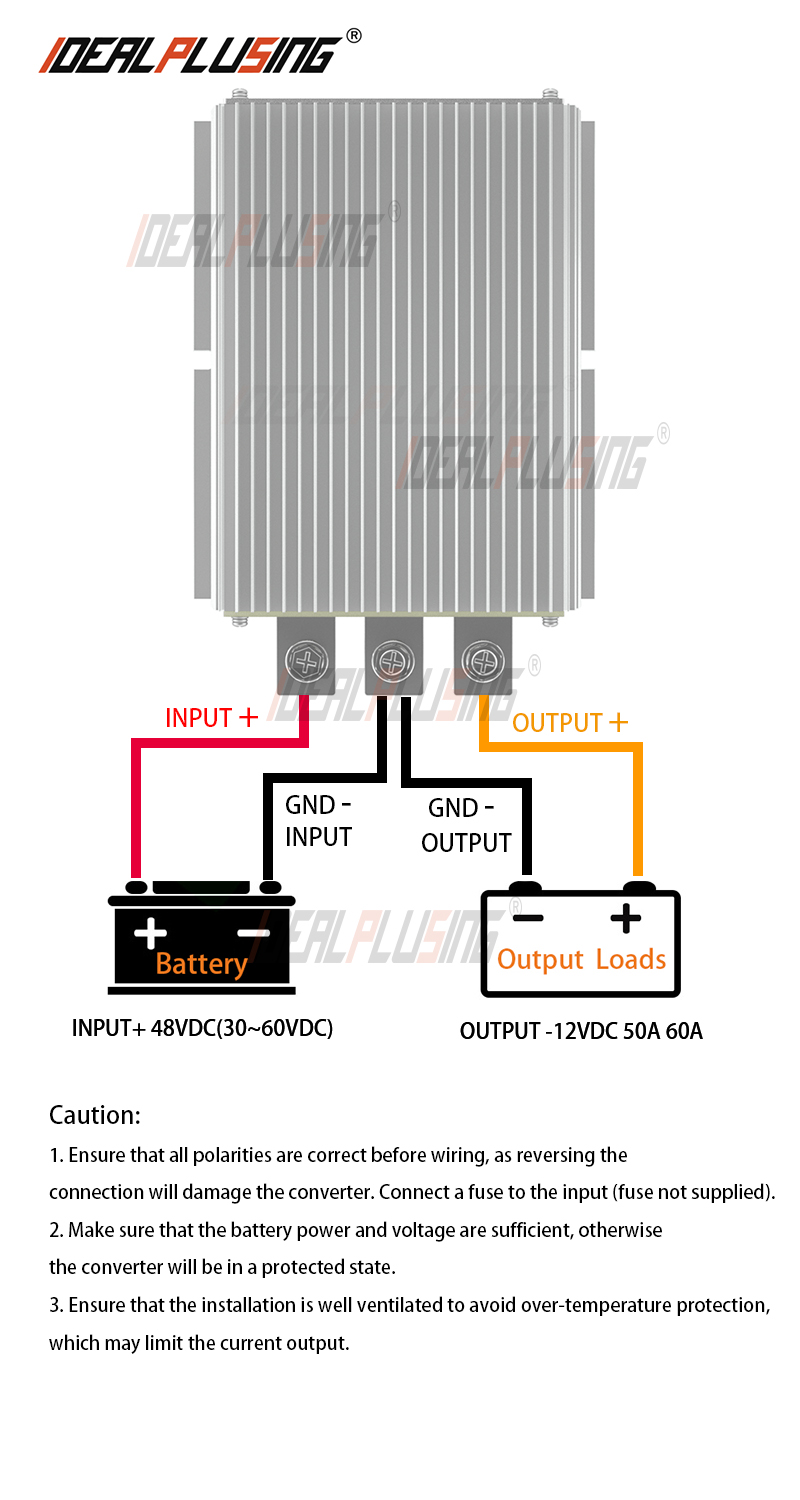
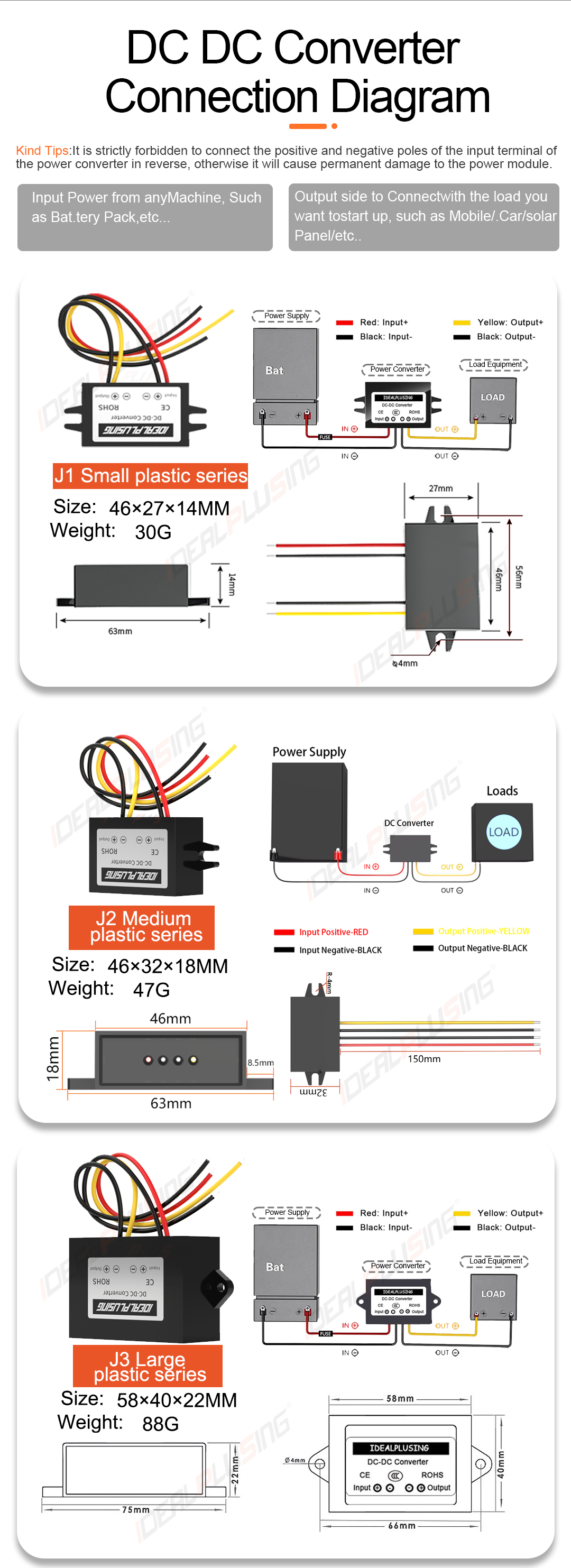
Wiring and Installation Guide
Frequently Asked Questions (FAQ)
What are the main categories of DC/DC converters and how do they function?

DC/DC converters convert an input voltage to a stable, fixed output voltage. They are categorized into three types: Boost (step-up), Buck (step-down), and Boost/Buck (step-up & step-down) converters. They utilize PFM control for light load efficiency and PWM control for heavy load stability.

Why do step-up (boost) converters require external fuses?

Due to their specific circuit layout, step-up series converters do not feature integrated output short-circuit protection. Placing a fuse on the input line is crucial to protect the input power source and wiring from high-current damage in the event of a short circuit.

When should I choose an isolated converter over a non-isolated one?

Isolated converters are highly recommended when powering expensive or sensitive loads, or when the input voltage is three times (or more) greater than the output. Non-isolated buck failure can send raw input voltage directly to the output, risking downstream damage, whereas isolated versions prevent this risk entirely.

How should I size a converter for motor or inductive loads?

For motor applications and inductive loads (such as coils, magnetic valves, or speakers), you should select a converter with a rated power that is 3 to 5 times the continuous operating power of the load. This ensures the unit can handle the high start-up currents associated with inductive components.

Can the ground lines of an isolated converter be shared?

No. The negative poles (grounds) of the input and output lines in an isolated converter must be kept completely separate. Sharing or tying these lines together bypasses the galvanic isolation barrier, negating the safety benefits of the isolated configuration.

What customize limits are available for voltage and current parameters?

Custom configurations can support customized inputs and outputs ranging from 1V to 1000V DC and currents from 1A to 1000A. Both isolated and non-isolated architectures can be engineered to fit these custom design limits.
Related Products